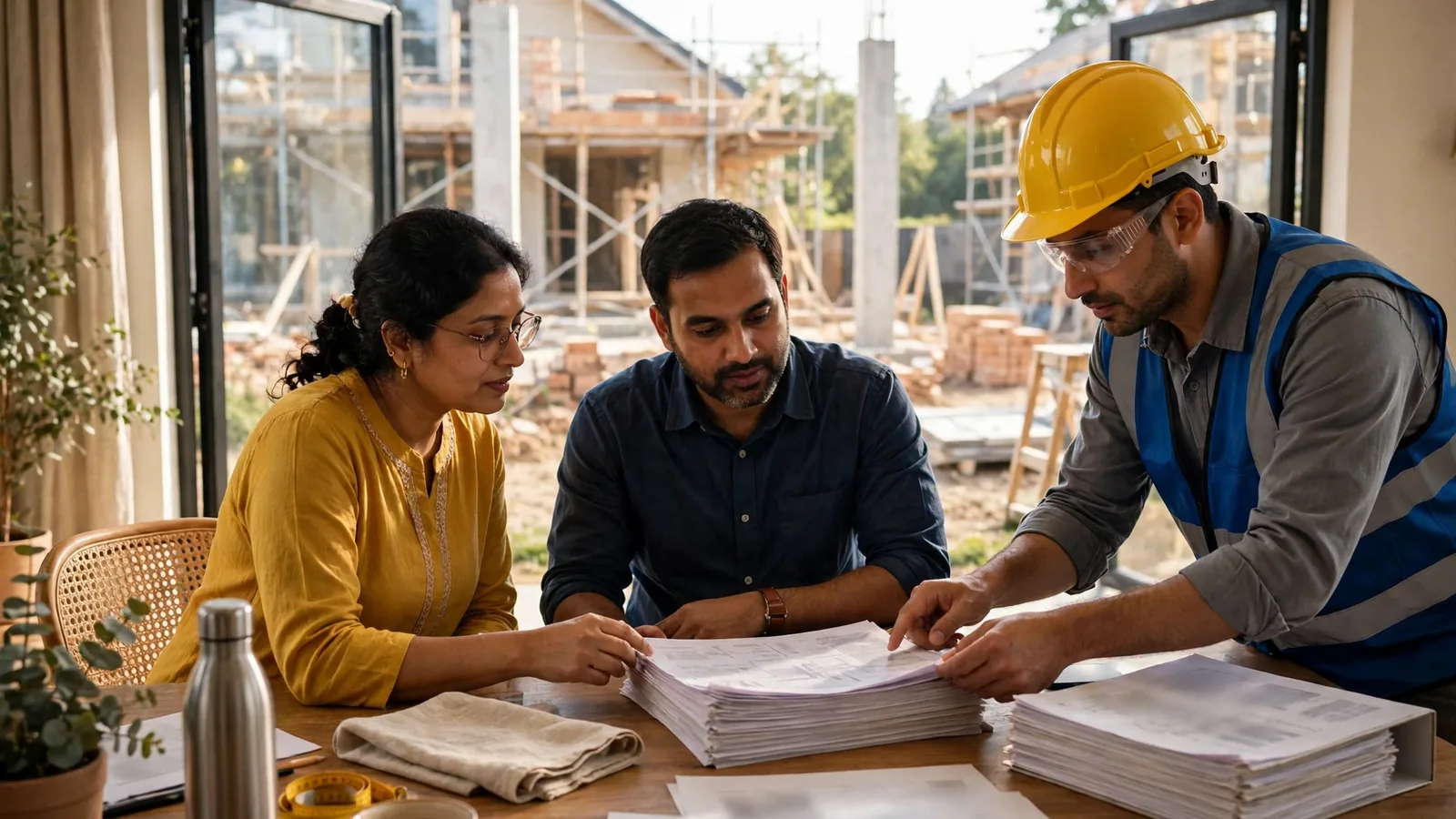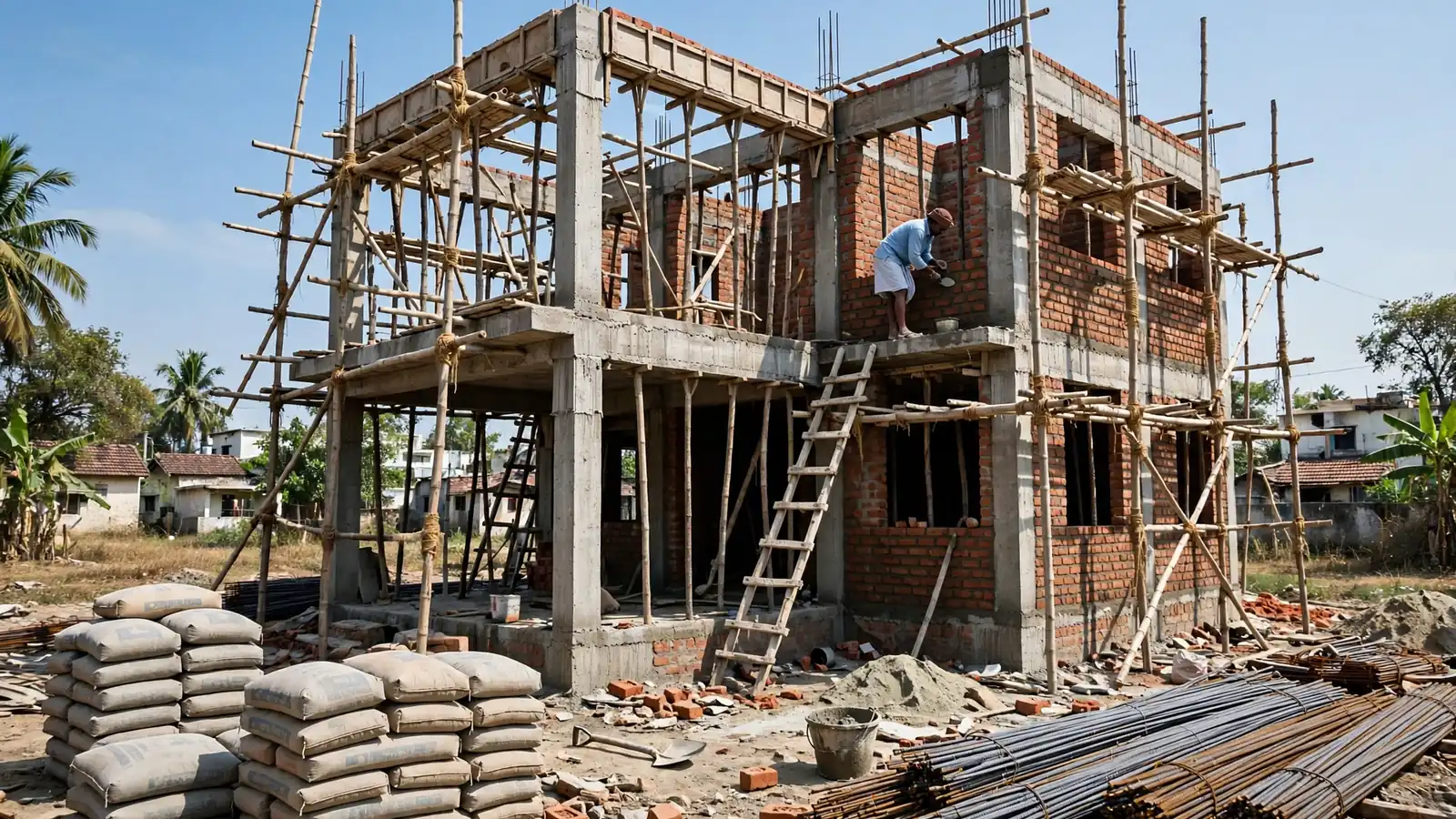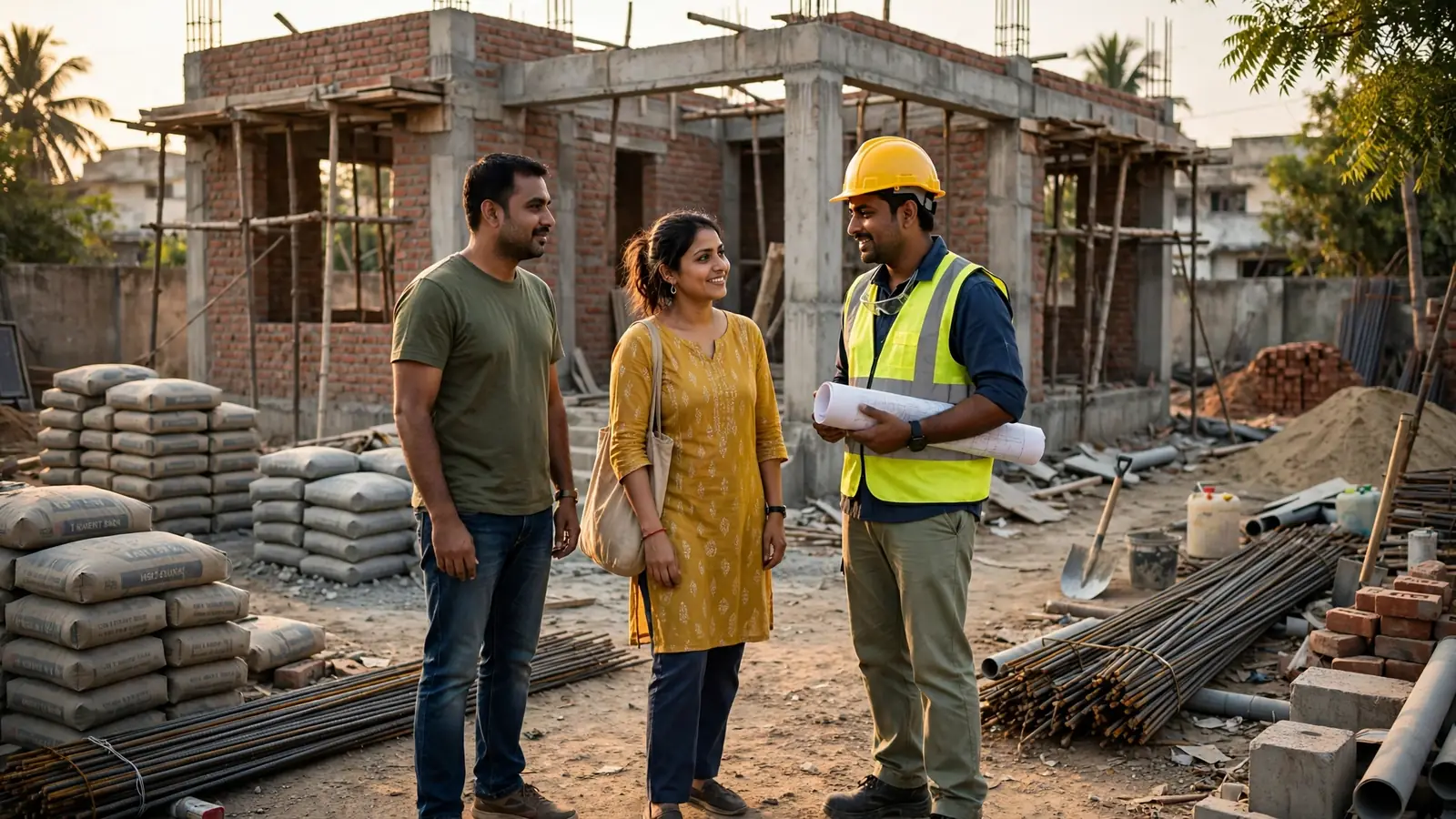
A 1,000 sq ft house is the most common first home an Indian family builds — a compact 2BHK on one floor, or a ground-plus-one on a smaller plot. It is also the size where the budget surprises people most, because the per sq ft rate a contractor quotes is only the middle of the story. Approvals, a compound wall, interiors and a contingency sit outside it. This guide works out the complete 2026 budget, stage by stage, so you can check a quote line by line instead of trusting a single number.
1. The short answer: what a 1,000 sq ft house costs in 2026
Every 2026 cost guide agrees on the shape of the answer and disagrees slightly on the exact numbers, because rates vary by city, brand and month. The overlapping consensus is the safest way to plan. These figures are for construction only, excluding land — illustrative ranges from Indian cost guides checked in November 2026.
| Finish level | Rate per sq ft | Total for 1,000 sq ft | What you get |
|---|---|---|---|
| Basic | ₹1,600 – ₹2,000 | ₹16 – ₹20 lakh | RCC frame, red or fly ash brick walls, vitrified tiles, flush doors, basic windows, standard fittings |
| Standard | ₹2,000 – ₹2,600 | ₹20 – ₹26 lakh | Branded cement and TMT steel, better flooring, branded fittings, modular switches — the most common choice |
| Premium | ₹2,600 – ₹3,500+ | ₹26 – ₹35 lakh+ | Designer or marble flooring, modular kitchen, premium fittings, false ceilings, smart-home wiring |
A standard finish at about ₹2,200 per sq ft — roughly ₹22 lakh — is the figure most families actually budget for, and it is the worked example used through this article. Our wider guide to house construction cost in India 2026 covers the same rates for other house sizes.

2. First, get the area right: built-up, plot and carpet are not the same
Before any rate means anything, check which area it is applied to. Contractor rates are quoted per sq ft of built-up area — the total floor area of all floors, including the walls. A 1,000 sq ft plot does not give you a 1,000 sq ft house: a ground floor on it, after setbacks and wall thickness, typically builds to 700–800 sq ft. A ground-plus-one on a 500 sq ft plot is also roughly 1,000 sq ft of built-up area. Carpet area is smaller still, usually 65–75% of built-up area. When a contractor says ₹2,200 per sq ft, ask in writing: built-up area as per the sanctioned plan, and which floors it covers. Compare quotes only on the same area basis, the same drawings and the same specification.
3. Where the money goes: the stage-by-stage split
For a standard-finish house, the total cost splits roughly like this. Use the table to check a contractor's stage-wise payment schedule — if the foundation stage alone is billed at 40% of the total, something is off, because the whole structure is only 35–40%.
| Work item | Share of total | Amount at ₹22 lakh |
|---|---|---|
| Foundation and RCC structure | 35–40% | ₹7.7 – ₹8.8 lakh |
| Brickwork and plastering | 12–15% | ₹2.6 – ₹3.3 lakh |
| Flooring and wall tiling | 8–10% | ₹1.8 – ₹2.2 lakh |
| Doors and windows | 8–10% | ₹1.8 – ₹2.2 lakh |
| Plumbing and sanitary | 6–8% | ₹1.3 – ₹1.8 lakh |
| Electrical | 5–7% | ₹1.1 – ₹1.5 lakh |
| Painting and finishing | 4–6% | ₹0.9 – ₹1.3 lakh |
By input type, the split is simpler: materials about 60–65%, labour about 25–30%, and the contractor's supervision, overheads and margin about 5–10%. Cement and steel alone are often 20–25% of the total, which is why their prices matter so much — a ₹30 rise per bag of cement across 400 bags is ₹12,000, and steel moving ₹5 per kg across 4,000 kg is ₹20,000. Another way guides present it is structure ~57%, finishing ~31% and services ~12%. The message does not change: the structure is more than half the money, and finishing is where budgets usually overshoot.
4. Material quantities: how much cement, steel and brick you actually need
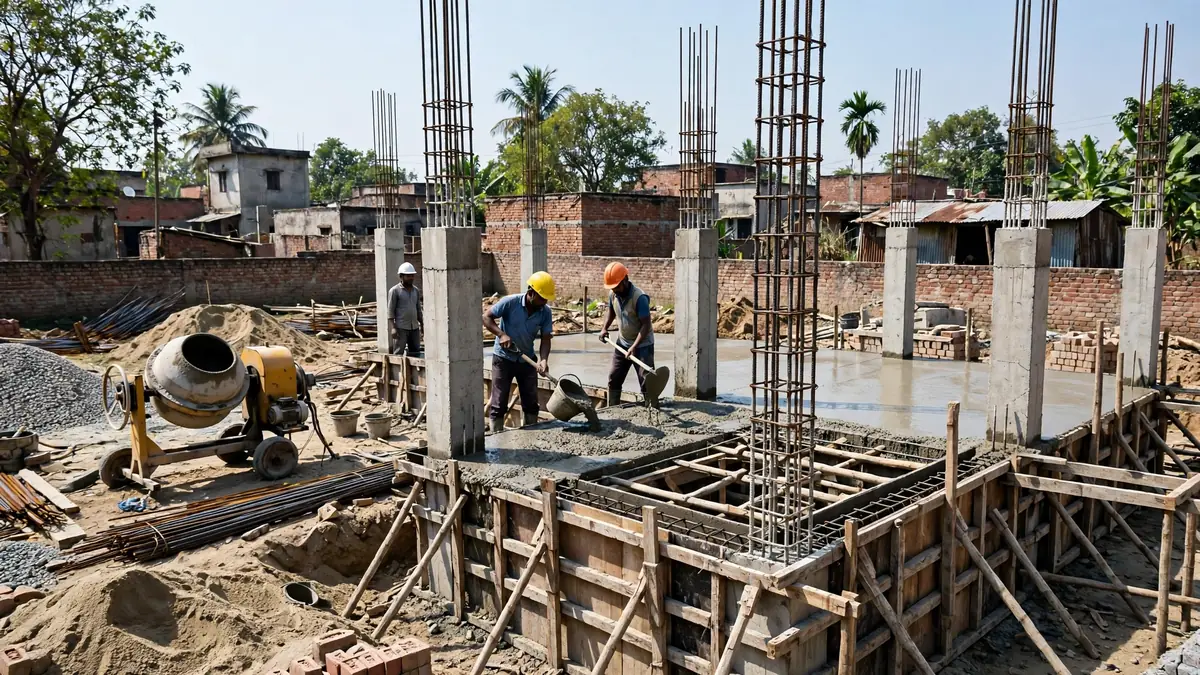
Material quantities follow simple thumb rules that most Indian cost guides agree on. They are planning figures, not a bill of quantities — your structural drawings decide the exact order, and you should order in stages rather than all at once.
| Material | Per sq ft | For 1,000 sq ft | Indicative 2026 rate |
|---|---|---|---|
| Cement (OPC/PPC, 50 kg bags) | ~0.4 bag | ~400 bags (range 350–500) | ₹380 – ₹445 per bag |
| TMT steel (Fe 500/Fe 550) | 3.5–4 kg | ~4,000 kg (range 3,000–4,200) | ₹52 – ₹65 per kg |
| Red clay bricks | — | ~11,000–21,000 | Varies by city and class |
| Sand | — | ~1,800 cu ft | Varies by city and type |
| Aggregate | — | ~1,500 cu ft | Varies by city and size |
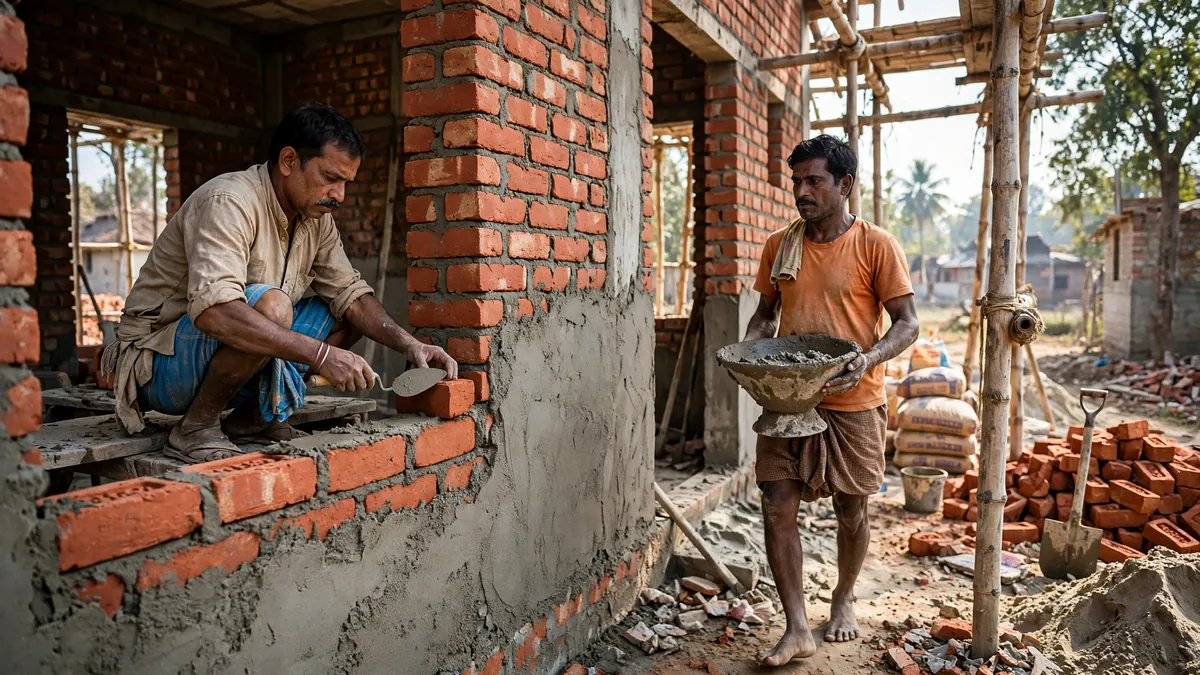
The brick range looks wide because it is: one guide counts about 11,000 bricks for a compact plan while another counts 18,000–21,000, and the difference is wall thickness, the number of internal walls and the plan itself. AAC blocks are the alternative — roughly 1,200–1,400 blocks of 600×200×150 mm for the same house. Read our guides on cement grades in India and TMT steel bars before you buy: the grade in the specification is what the contractor must supply, and what you should check on delivery.
5. Finishing: flooring, doors, windows and paint
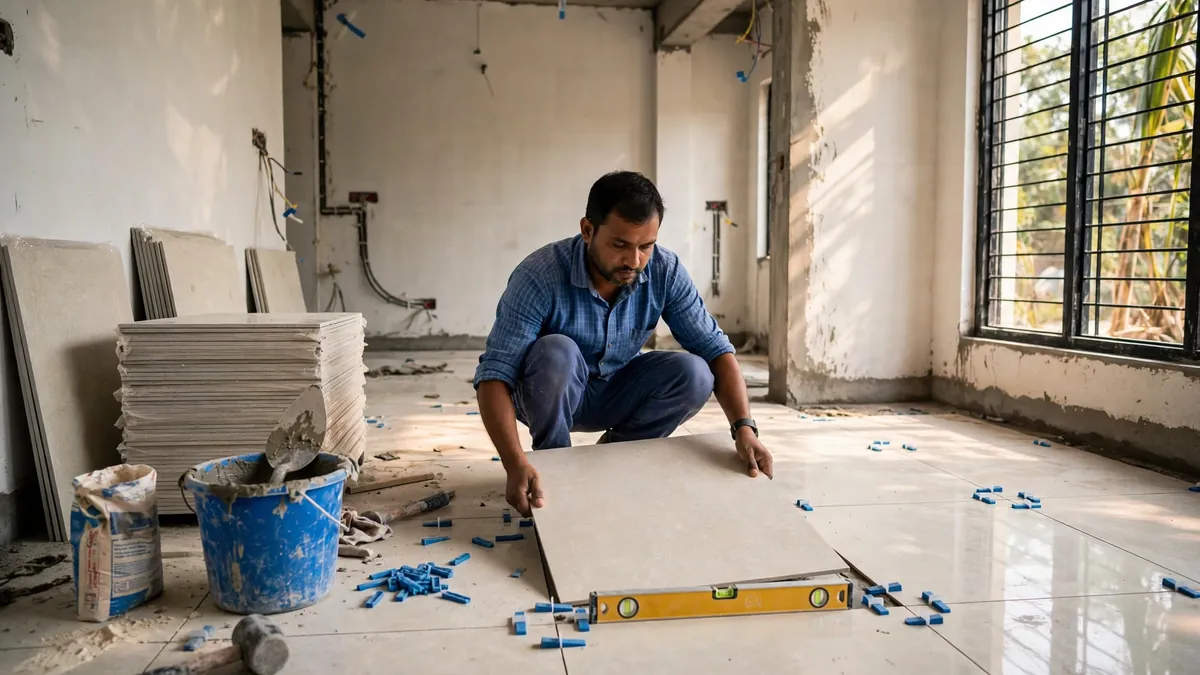
Finishing is where two houses at the same per sq ft rate end up costing very different amounts. Flooring alone is 8–10% of the total: basic vitrified tiles around ₹40–50 per sq ft keep a standard budget on track, while designer tiles or marble can double the flooring line. Doors and windows, another 8–10%, work the same way — flush doors and basic aluminium or UPVC windows fit the standard band; teak doors and premium window systems push the house towards premium. Painting is 4–6%, but it is also where poor earlier work shows up: uneven plaster means extra putty and extra coats. Decide flooring, door, window and paint specifications in writing before construction starts, with brand and rate per sq ft named — changing them mid-way is the most common reason a ₹22 lakh budget becomes ₹25 lakh. If you are comparing a turnkey quote with a labour-only arrangement, read our turnkey vs labour contract comparison.
6. Services: electrical and plumbing
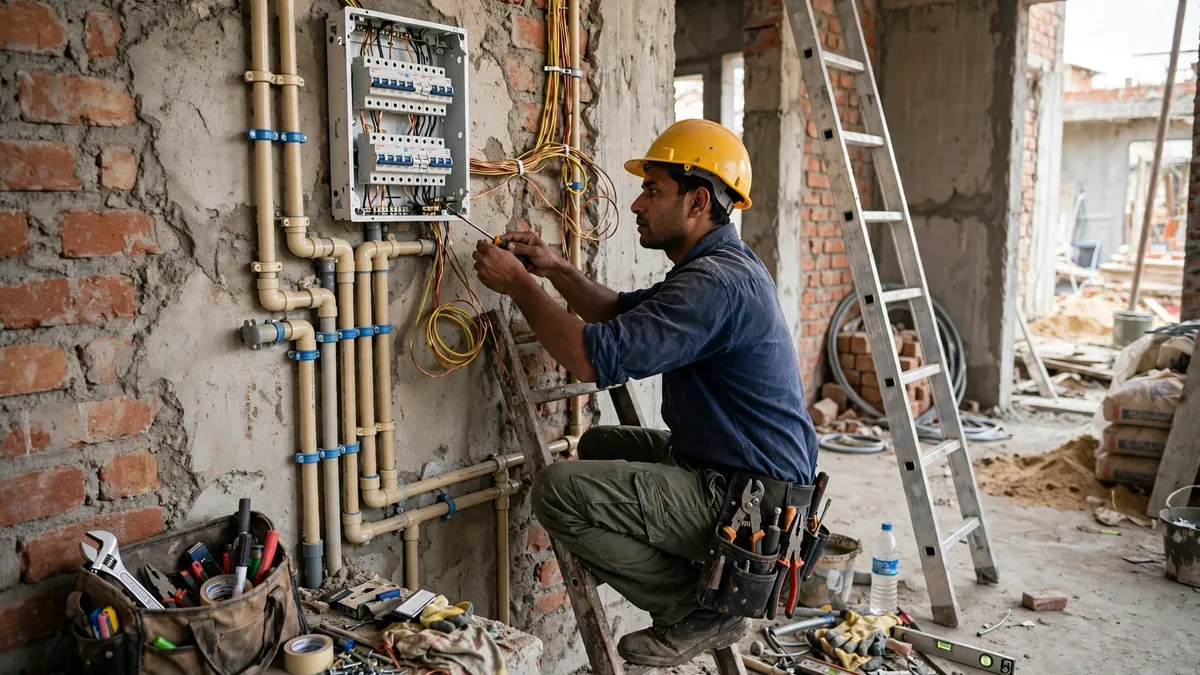
Electrical work is 5–7% of the total and plumbing with sanitary fittings is 6–8% — together roughly ₹2.4–3.3 lakh on a ₹22 lakh house. Small in share, large in consequence: undersized wiring, a missing earth connection or a wrongly sloped drainpipe costs far more to fix after plastering than during the work. Decide the load before the wiring starts — how many ACs, geysers and heavy appliances the house will run — because the MCB rating, wire sizes and number of circuits all follow from it. Our guide to house wiring in India covers earthing, MCBs and load planning.
On plumbing, the expensive mistakes are the invisible ones: pipes buried without a pressure test, drains laid without the right fall, and no access point left for a future repair. Ask for a water pressure test before the pipes are concealed, and confirm the brands named in the specification are the ones actually installed.
7. What the per sq ft rate leaves out: hidden costs
The per sq ft rate is a construction rate, not a total project cost. On a 1,000 sq ft house the forgotten items commonly add 15–25% on top of the headline figure. Our guide to hidden costs in home construction covers all twelve; the big ones are:
Approvals and professional fees. Plan sanction charges vary by authority, architect fees typically run 2–5% on top of construction cost, and soil testing — a small cost that prevents a large one — decides the foundation type.
Compound wall and external work. The boundary wall, gate, external drainage and paving are almost never inside the per sq ft rate, and are usually needed before you can move in.
Utility connections and borewell. Water and electricity connections, deposits and meter charges, and a borewell where municipal supply is unreliable, all sit outside the rate.
Interiors. Modular kitchen, wardrobes, false ceilings and furniture are a separate budget — a standard house can absorb another ₹3–6 lakh here without trying. Budget interiors as their own line, not as an afterthought.
Price escalation and contingency. Material prices rose roughly 8–12% year-on-year into 2026, and a build takes 6–12 months, so a quote fixed in January is not the price paid in September unless the contract says so. Keep a 5–10% contingency untouched until the end, and expect 3–5% material wastage even on a well-supervised site.
Before you accept any per sq ft quote, ask for the exclusions list in writing: approvals, compound wall, interiors, GST treatment and the area basis. If it is not written down, assume it is not included.
8. Keeping the budget under control
A 1,000 sq ft house is small enough that four decisions control most of the cost. Get these right and the budget holds.
Keep the plan simple. A rectangular plan with fewer corners and standard room sizes costs less than the same area folded into bays and cut-outs. A ground-plus-one on a smaller plot also shares one foundation and one roof across two floors, which is usually cheaper per sq ft than a sprawling single floor.
Fix the specification before the first payment. Cement brand and grade, steel grade, concrete grade, brick or block type, tile rate per sq ft, sanitaryware and switch brands — written down, with rates, before work starts. Our guide to reading a BOQ like an engineer shows how to check each line.
Pay stage by stage, against verified milestones. Link payments to physically verified work — after the foundation, after each slab, after plastering — and keep the advance small. Our guide to construction contract payment schedules explains the clauses and red flags. Never pay for work that has not been checked. Buy cement and steel in lots against the schedule, check brand and weight on delivery, and keep a simple register of what arrived and what was used.
Hold the contingency until the end. The 5–10% contingency is not spare money for a nicer tile in month two; it is the buffer for the price rise or the repair you discover in month eight. Spend it early and the last stage gets built on credit.
9. City variation: the same house, a different price
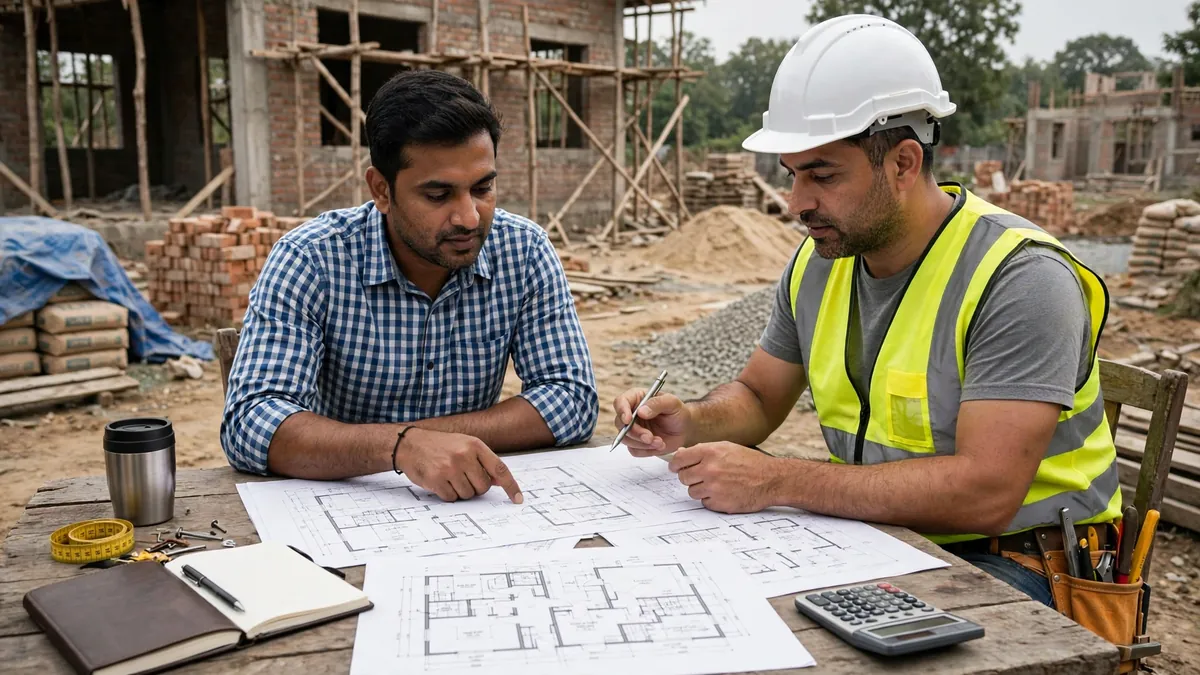
Location moves the total more than most families expect. Delhi NCR standard rates run roughly ₹2,200–₹3,200 per sq ft, with Faridabad and Ghaziabad at the affordable end and Delhi and Gurgaon at the top; Mumbai and Bengaluru sit higher still, while smaller towns can come in below the national standard band. The drivers are labour wages (a skilled mason earns ₹600–₹900 a day in most cities, ₹900–₹1,200 in tier-1 metros), material transport and local demand. Check a quote against two or three local ones for the same specification — a rate far below the local range usually means a thinner specification, not a better deal.
Final check before you budget
For a 1,000 sq ft house in India in 2026, plan ₹16–20 lakh for basic, ₹20–26 lakh for standard and ₹26–35 lakh or more for premium construction, excluding land — then add approvals, a compound wall, interiors and a 5–10% contingency on top. The worked budget here, a standard finish at about ₹2,200 per sq ft, comes to roughly ₹22 lakh for the house itself. The number that matters is not the per sq ft rate but the total on the same drawings, specification and area basis, with exclusions added back. If you would like a site engineer to review your quote and BOQ before you sign, talk to RTPL.