A contractor quotes Rs 2,000 per sq ft, you multiply by 1,200 sq ft, and the maths says Rs 24 lakh. Then the real bill lands closer to Rs 30 lakh — and nothing went wrong. The quote was never the whole house. Published 2026 guides agree the lines a per-square-foot quote leaves out commonly add 20 to 30 per cent to what a house finally costs. This guide explains what the rate covers, breaks down a BOQ line by line, and lists the hidden costs to budget before you sign.
1. What a per sq ft rate actually means
A per-square-foot rate is a shorthand, not a price list. Before you compare two quotes, ask three questions: per square foot of what, including what, and at which quality. Built-up area, carpet area and super built-up area are three different denominators, and a quote is only comparable to another quote on the same one — most Indian contractor rates use built-up area, so confirm the denominator in writing.
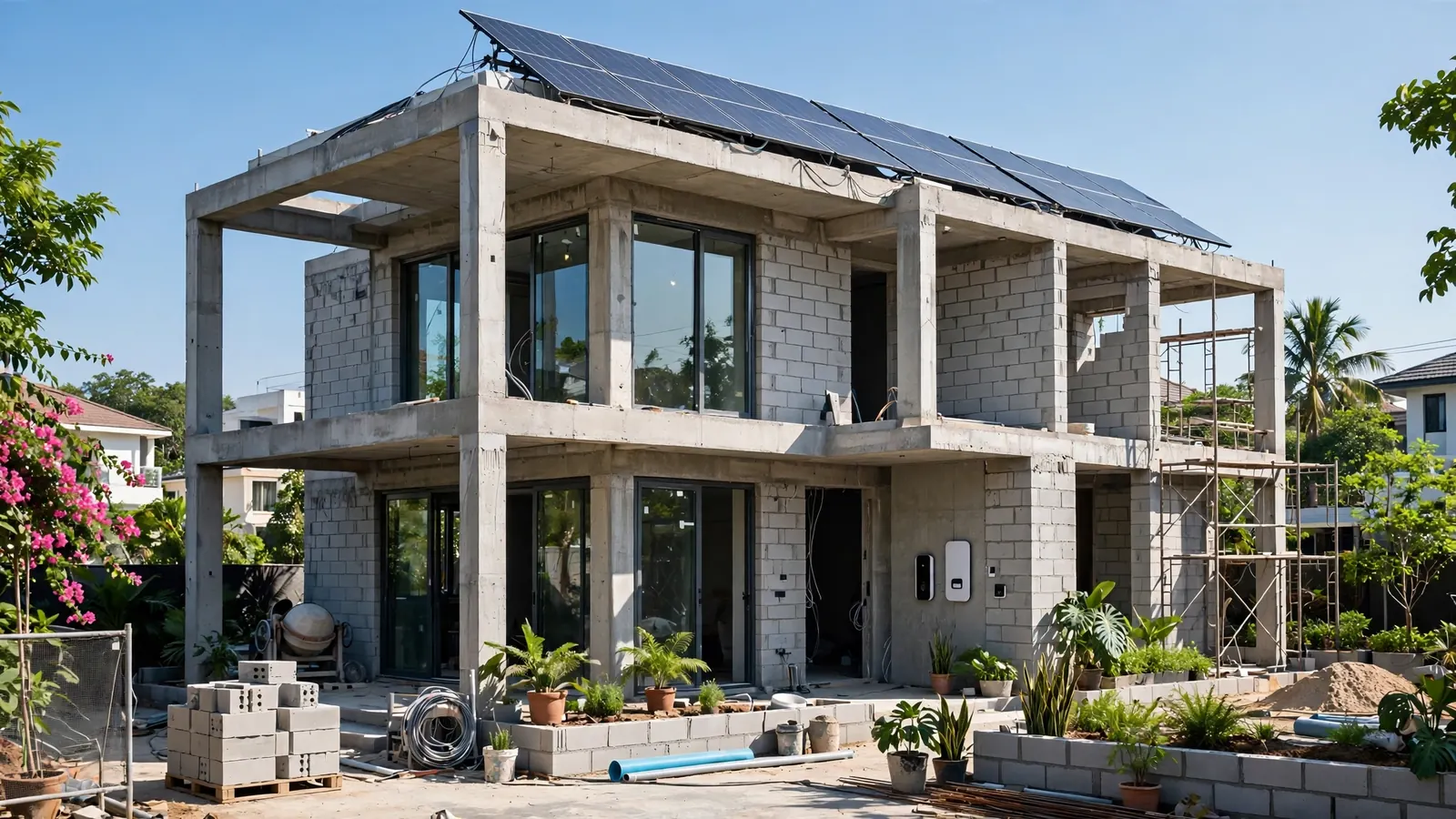
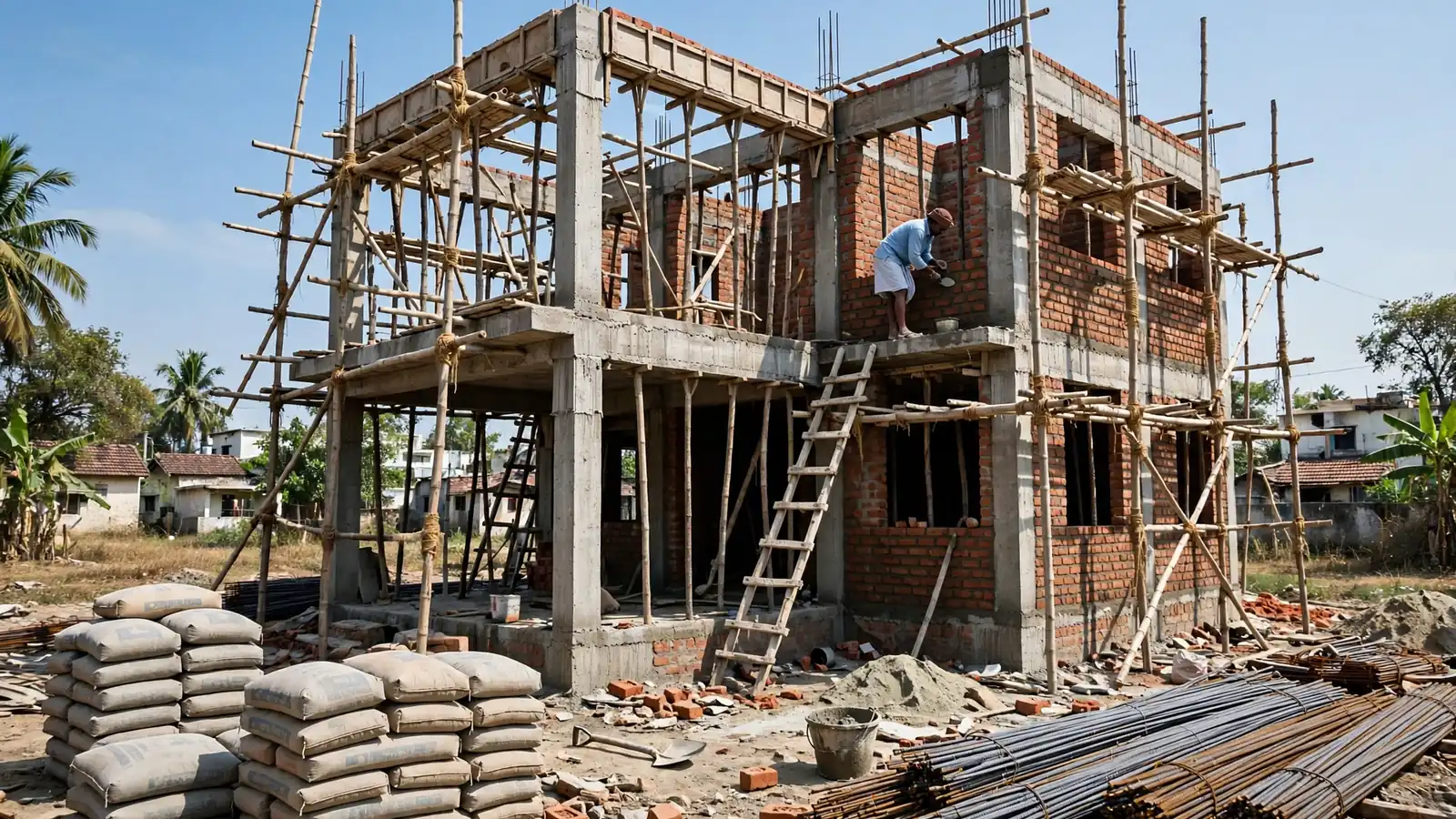
A standard per sq ft rate typically includes the structure and basic finish: excavation and foundation, PCC and RCC work, columns and slabs, internal brickwork, plastering inside and outside, basic flooring, standard-grade doors and windows, electrical wiring and distribution boards, plumbing supply and drainage lines, and a basic paint coat. That is the house as a shell you can walk into — not the house you can live in.
What it typically excludes is where budgets break: architect and structural engineer fees, building plan sanction charges, electricity and water connection fees, external development charges from the local authority, any soil stabilisation, modular kitchen, premium woodwork, false ceiling, premium sanitary ware, and GST on materials and services. Ask for the exclusion list in the same document as the rate. If a quote has no exclusion list, it is not a quote — it is a headline.
2. House construction cost per sq ft in India, 2026
There is no official, regulated per-square-foot construction rate in India — no state or municipal body publishes one. Every rate you see comes from market surveys of contractors and builders. The 2026 guides do not agree exactly, so the table below shows the blended spread across the major published guides — illustrative market ranges, not a quotation for your plot.
| Quality tier | Rate per sq ft (Rs) | What you typically get | Best for |
|---|---|---|---|
| Basic / economy | 1,200 – 1,800 | Cement flooring, standard doors and windows, basic electrical and plumbing, local materials | Budget homes, rental property, smaller towns |
| Standard / mid-range | 1,800 – 2,800 | Vitrified tiles, branded cement and steel, CPVC plumbing, modular-kitchen-ready shell, branded fittings | Most family homes — the common choice |
| Premium / luxury | 2,800 – 4,500+ | Imported tiles or marble, granite counters, designer fittings, smart-home wiring, architectural details | High-end homes in metros; no upper limit on luxury |
Two things move the rate most: cement and TMT steel. A 2026 guide puts cement at roughly Rs 350 to 500 a bag and TMT steel at Rs 65 to 85 a kilo — both quoted on the day, not fixed for the duration of your build. A quote that locks material prices for six months is either carrying a margin for it or will come back for a revision.
3. City-wise variation: why the same house costs more in a metro
Cost varies between cities mainly because of labour rates and availability, not material prices — cement and steel cost roughly the same everywhere, but a mason's daily wage and the cost of getting material to site do not. Published 2026 estimates for a standard-quality finish:
| City / region | Approx. per sq ft (Rs) | Why it varies |
|---|---|---|
| Mumbai | 2,500 – 3,800+ | Highest in India — labour import, logistics, space constraints |
| Delhi NCR | 2,200 – 3,200 | Wide range: Noida and Ghaziabad sit lower than central Delhi; premium demand pushes the top |
| Bengaluru | 2,000 – 2,800 | High labour costs, strong quality standards |
| Tier-2 cities (Jaipur, Ahmedabad, Lucknow) | 1,700 – 2,200 | Lower labour and logistics costs at standard specification |
| Smaller towns / Tier-3 | 1,150 – 1,700 | Local materials and labour; premium finishes may still need metro sourcing |
As a local example, Delhi NCR sits at the higher end of the India range at Rs 2,200 to 3,200 per sq ft for standard finish, and metros generally carry a 25 to 35 per cent premium over the national average. If you are building in Mainpuri or another UP town, expect the Tier-2 or smaller-town band — but verify with two or three local quotes, because no guide knows your soil, your plot access, or this month's sand price.
4. BOQ breakdown: where the money actually goes
A BOQ — bill of quantities — is the itemised list of every work package, its quantity, its unit and its rate. It is the only document that turns a per-square-foot headline into a checkable budget. For a standard residential build, the money roughly splits like this:
| Work package | Typical share | What sits inside it | Check before you pay |
|---|---|---|---|
| Structure (foundation, RCC, masonry) | 30–35% | Excavation, PCC, footings, columns, beams, slabs, brickwork | Concrete grade (e.g. M25), steel grade (Fe 500/550), cube test records |
| Finishes (flooring, plaster, paint) | 20–25% | Floor tiles, wall plaster, putty, primer and paint, external finish | Tile brand and size, paint coats, plaster thickness |
| Doors, windows, woodwork | 8–12% | Main door, internal doors, windows, frames, grills | Material (teak, flush, uPVC), hardware brand, mosquito mesh |
| Plumbing, electrical, MEP | 12–15% | CPVC/PPR pipes, sanitary fittings, wiring, switches, MCBs, earthing | Pipe and wire brands, point counts, load calculation |
| Labour (all trades) | 25–30% | Masons, bar benders, carpenters, electricians, plumbers, helpers | Whether labour is in the rate or billed separately |
Read the BOQ the way a site engineer does: check the quantities against your drawings, the specifications against the brands you agreed, and that every line has a unit — a rate without a unit is a blank cheque. If a BOQ has lump-sum lines with no breakup, ask for the breakup before you sign.

5. Worked example: a 1,200 sq ft house, standard finish
Take a 1,200 sq ft built-up area at a standard rate of Rs 2,000 per sq ft — inside the published 2026 standard band. The base build comes to Rs 24 lakh. Now add the lines the rate usually leaves out:
- Architect and structural engineer: roughly Rs 15 to 40 per sq ft, or 3 to 7 per cent of construction cost — about Rs 72,000 to 1.7 lakh on this house.
- Plan sanction and municipal charges: varies by authority; budget a separate line and confirm the fee schedule from the local body, not from the contractor.
- Water and electricity connections: separate application fees and deposits; in many towns the borewell and pump are also on you.
- Compound wall: roughly Rs 400 to 800 per sq ft of wall face area — a 100-ft boundary at 6 ft height is 600 sq ft of wall, about Rs 2.4 to 4.8 lakh.
- Contingency at 10 to 15 per cent: Rs 2.4 to 3.6 lakh on the base build, for design changes, soil surprises and material price movement during the project.
Add it up and the honest budget is roughly Rs 29 to 33 lakh before interiors — about 20 to 30 per cent above the headline rate, exactly the gap the guides warn about. A duplex (G+1) version costs roughly 5 to 8 per cent more per sq ft, because of the extra slab, staircase and services. As a cross-check, published 2026 guides put a 1,000 sq ft standard house at roughly Rs 14 to 22 lakh — the same order of magnitude, with city and specification doing the rest.
6. Hidden costs homeowners forget to budget
These twelve expenses most often surprise first-time builders. Budget them as separate lines, not as rounding:
- Land and legal: registration, stamp duty, legal verification — the plot is never in the construction rate.
- Soil testing and foundation surprises: black cotton soil, high water table or loose fill can change the foundation type and its cost.
- Plan approval and development charges: sanction fees, external development charges and any betterment levy from the local authority.
- Temporary site costs: site office, water and electricity during construction, watchman, material storage and security.
- Compound wall, gate and external works: often the first thing cut from the quote and the first thing you need on day one.
- Borewell, sump and septic tank: water source and waste disposal are site works, not part of the shell rate.
- Electricity and water connections: application, meter and deposit charges, plus the cost of the internal distribution if it is billed separately.
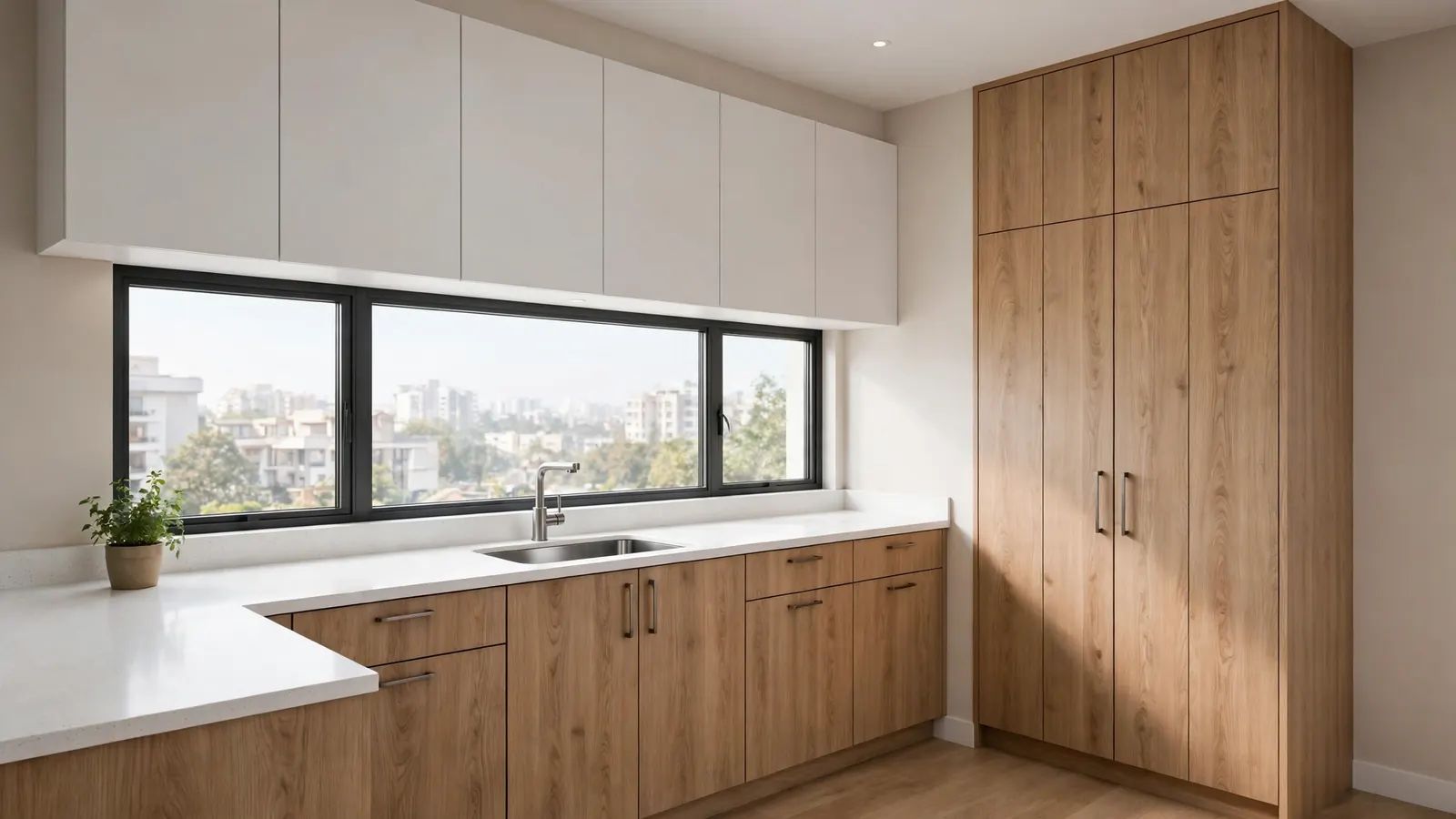
- Kitchen, wardrobes and false ceiling: the big three interiors — a modular kitchen alone is a separate budget. See our guide on modular kitchen cost in India.
- Sanitary ware upgrades: the rate covers basic fittings; the ones you choose rarely are basic.
- GST: tax on materials and services, where applicable — confirm whether your quote is inclusive or exclusive.
- Price escalation during the build: cement and steel move month to month; a long build needs an escalation clause or a contingency for it.
- Snag fixing and handover: the last 5 per cent — touch-ups, cleaning, pest treatment — that nobody budgets and everybody pays for.
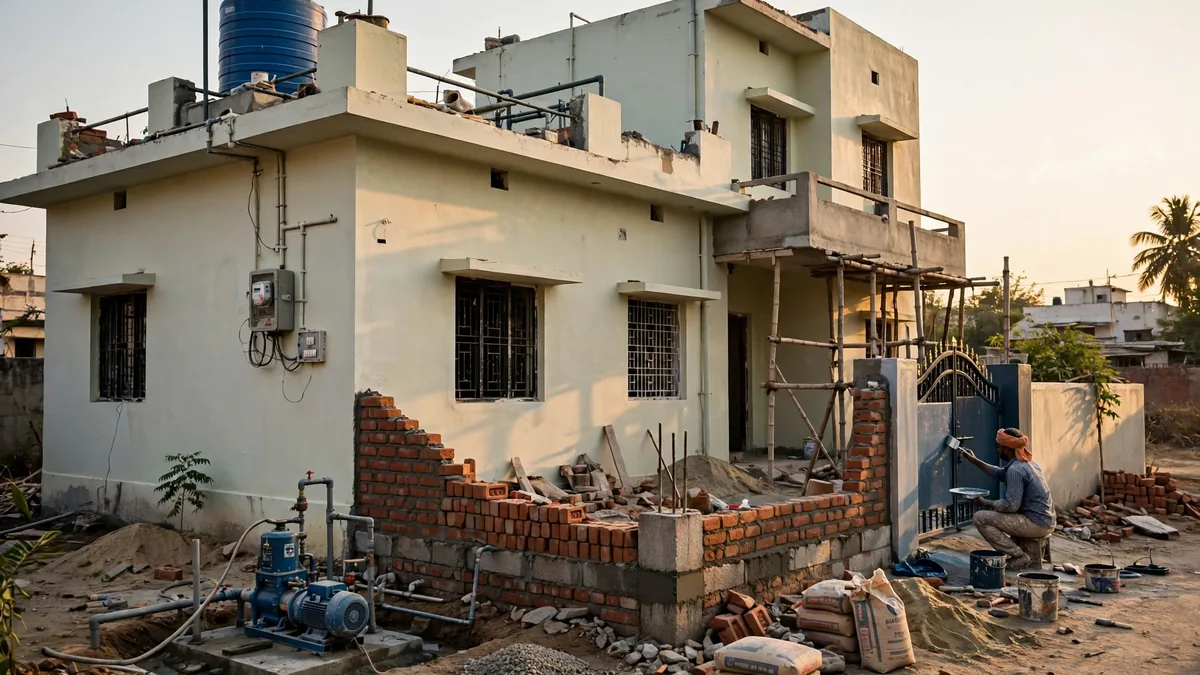
Final member sizing, reinforcement, foundation selection and any structural decision require project-specific assessment by a qualified structural engineer. Rates and shares in this article are planning guides from published market surveys — they are not a substitute for a BOQ prepared against your approved drawings.
7. How to compare two contractor quotes fairly
Never compare headline rates. Compare like for like: same built-up area denominator, same specification sheet, same inclusion and exclusion lists, same payment schedule. Ask each contractor for the BOQ, the brand list for cement, steel, pipes, wires, tiles and sanitary ware, the concrete and steel grades, and the curing and testing plan — then check the quantities against your drawings.
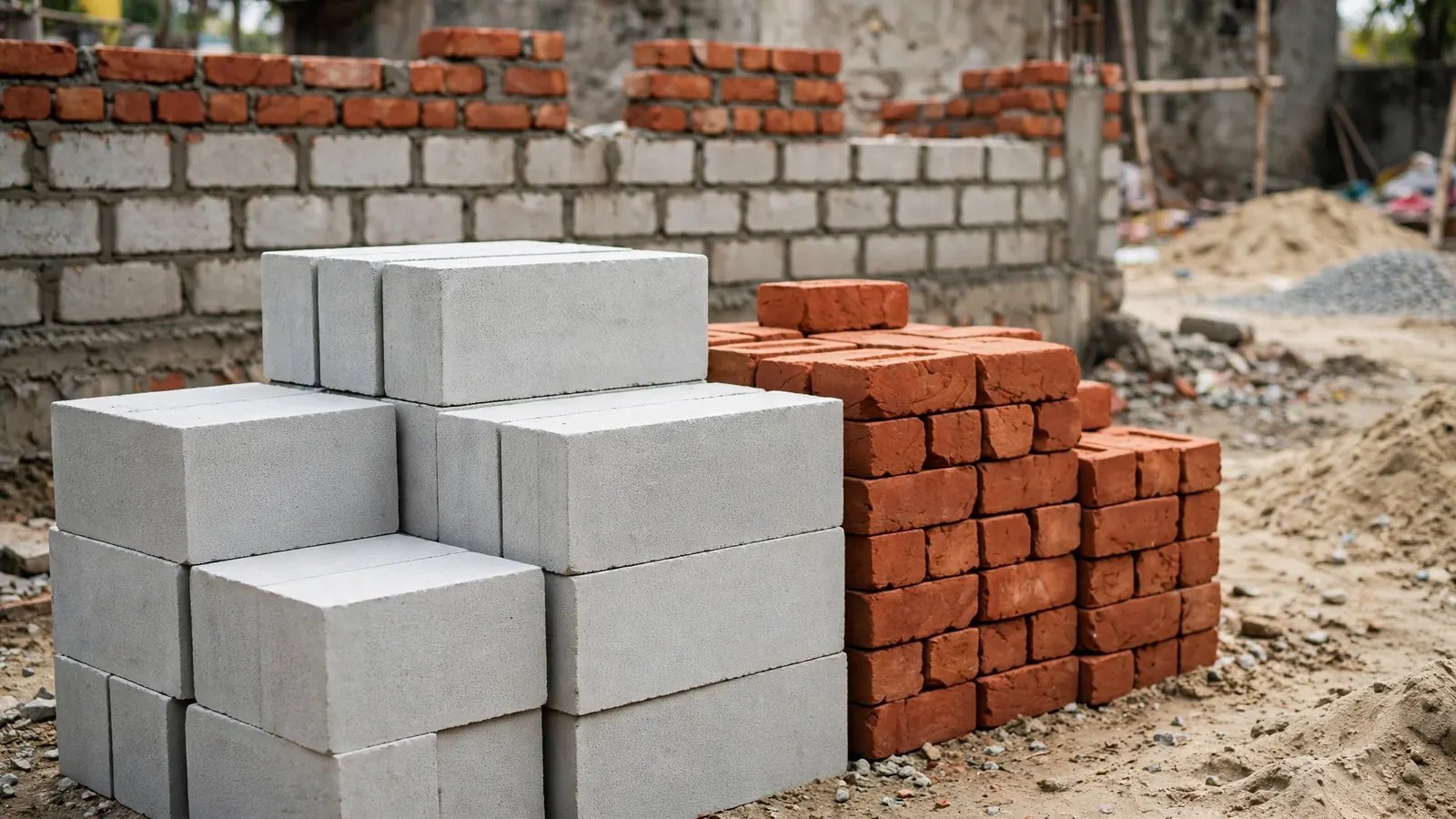
Watch for the classic traps: a very low rate that excludes plaster or flooring, quantities padded above the drawings, "or equivalent" brand clauses with no approved list, and a payment schedule that front-loads money before work. A rate 20 per cent below every other quote is not a bargain — it is a scope gap you will pay for later, usually as an "extra". For material choices that move the rate, our comparison of AAC blocks vs red bricks in India shows how one walling decision changes cost, speed and heat.
8. Budget checklist before you sign
- Base build cost from the BOQ, on confirmed built-up area.
- Architect and structural engineer fees, agreed in writing.
- Plan sanction, development charges and connection fees — confirmed with the local authority.
- Compound wall, borewell, sump and septic tank as separate lines.
- Kitchen, wardrobes, false ceiling and sanitary upgrades as a separate interiors budget.
- GST status of the quote — inclusive or exclusive, in writing.
- Contingency of 10 to 15 per cent, held back and not spent on upgrades.
- Payment schedule tied to milestones, not to calendar dates.
If you are planning a home in Uttar Pradesh or Delhi NCR and want a BOQ prepared against your drawings, RTPL Constructions & Engineering can help you work through the estimate before you commit to a contractor. A clear budget agreed before the first brick is laid is the cheapest insurance a build ever gets.