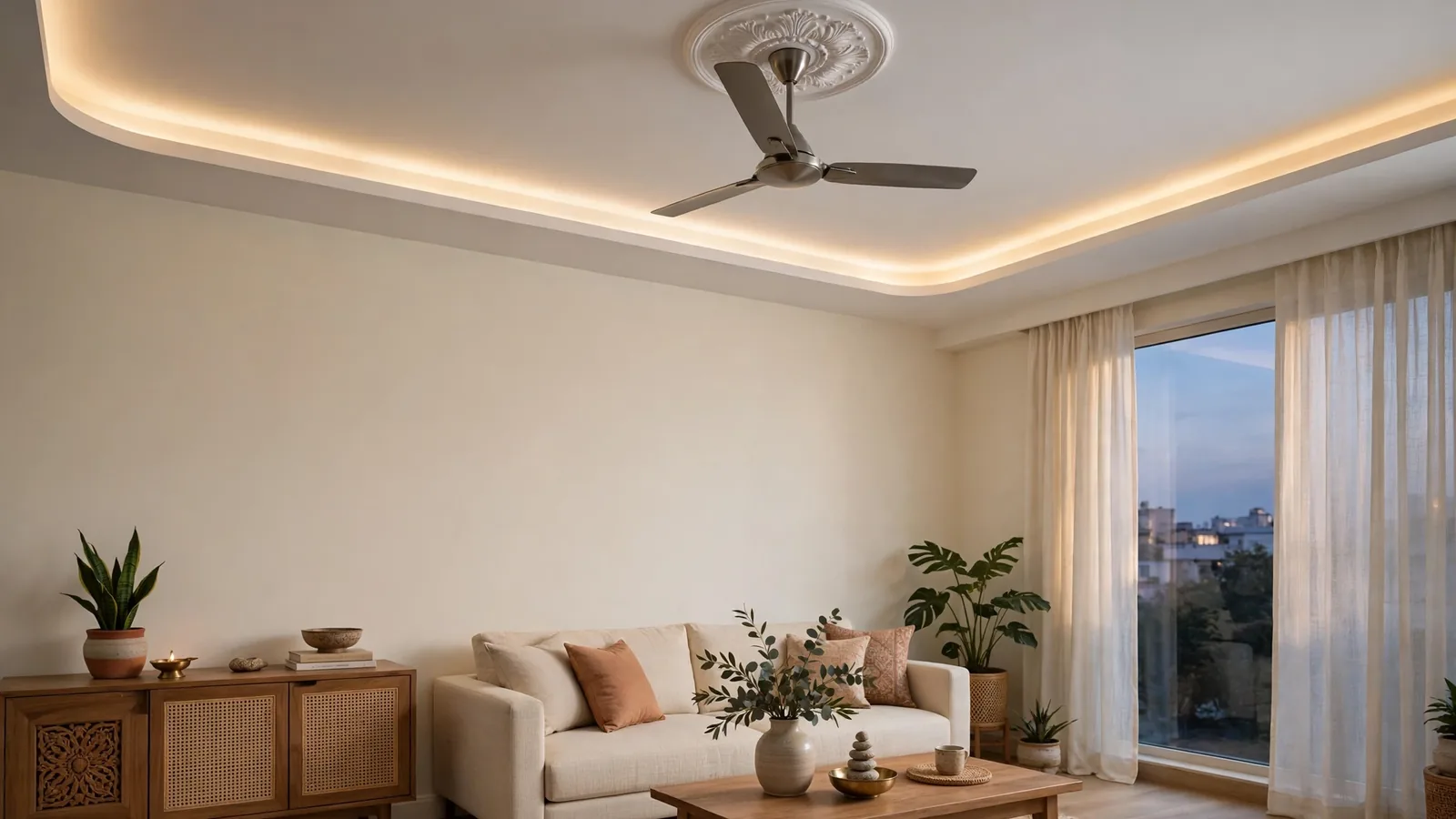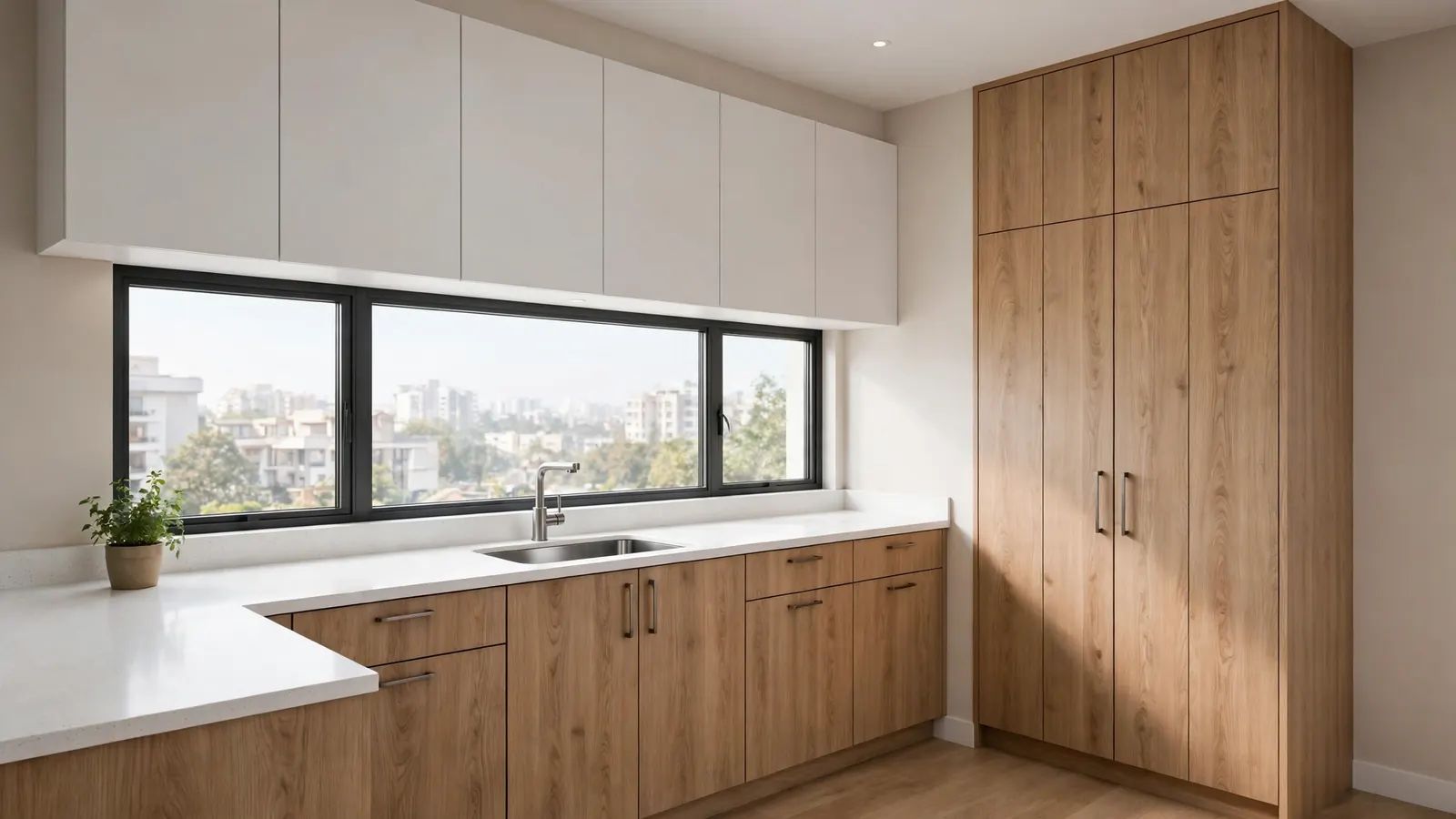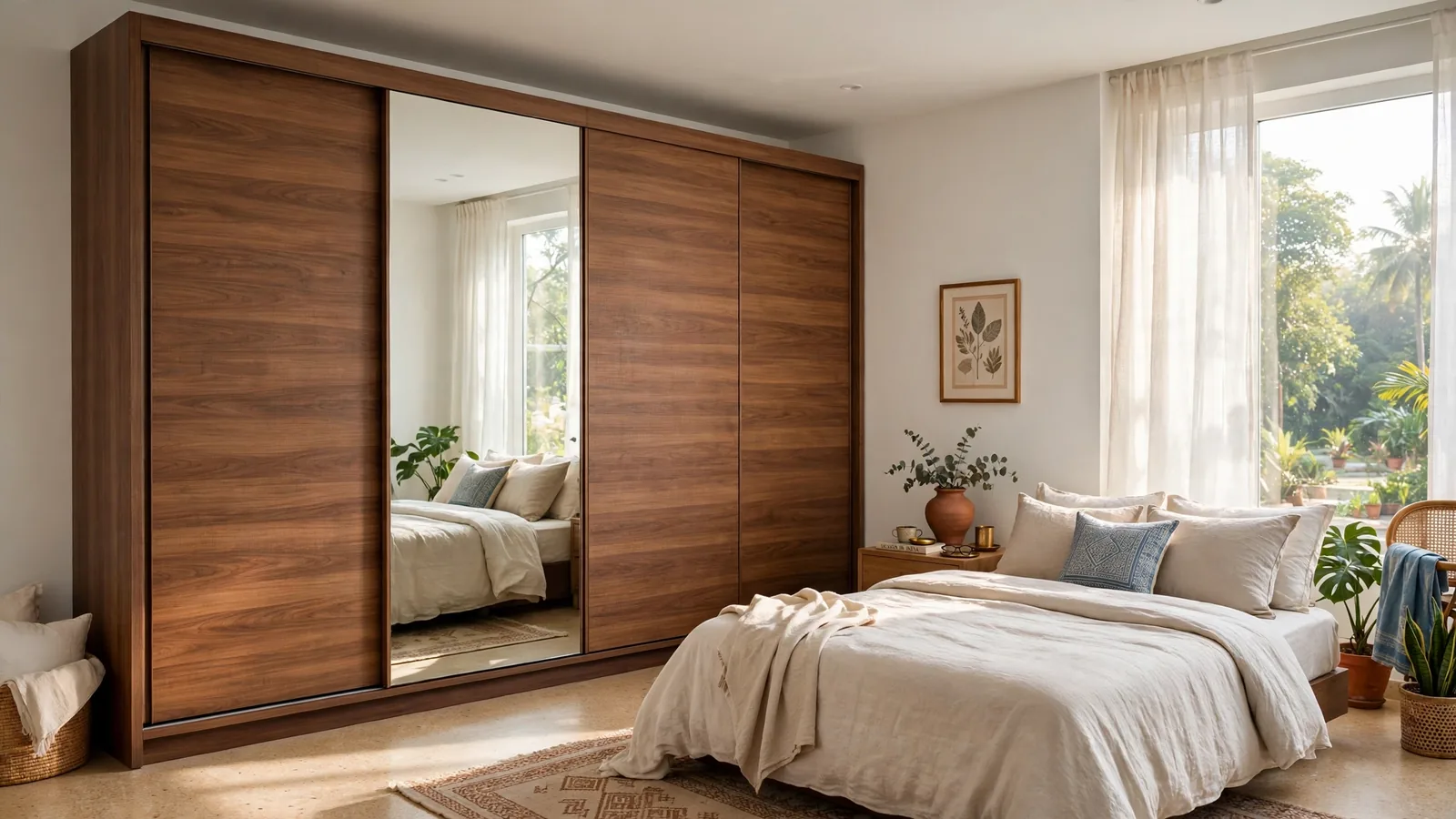
A 6 ft by 7 ft modular wardrobe can cost anywhere from about ₹50,000 to well over ₹1,00,000 in India in 2026 — and the difference is rarely the wood. It is the shutter type, the material behind the laminate, the hardware, and what the quotation quietly leaves out.
This guide explains modular wardrobe cost in India 2026 in plain language: how pricing works, what sliding costs over hinged and why, which materials are worth paying for, and the checks to run before you pay.
1. How wardrobe pricing actually works
A modular wardrobe is priced per square foot of its front elevation — width multiplied by height. A wardrobe 6 ft wide and 7 ft tall is 42 sq ft; a master-bedroom wardrobe 8 ft wide and 9 ft tall is 72 sq ft. The rate applies to that front area, not to the floor space it occupies or the shelves inside it.
That single rule explains most quotation confusion. Two wardrobes can share a width and a rate yet cost very different amounts, because one is 7 ft tall and the other runs floor to ceiling at 9 ft. It is also why a per-running-foot quote should always prompt one question — at what height? One source's worked example shows the same wardrobe spanning ₹8,400 to ₹17,550 per running foot depending only on height and shutter type.
Before comparing quotes, convert each to the same basis: total price divided by front-elevation area, with height, shutter type and specification written next to it. Without those in writing, the rate is not comparable.
2. Sliding vs hinged: what the extra money buys
The first decision is the shutter type — the biggest single cost lever. Hinged shutters swing open on hinges; sliding shutters run on tracks. Both store clothes equally well — they differ in cost, in space, and in what can go wrong.
Illustrative 2026 rates seen in metro guides put hinged wardrobes at roughly ₹1,200–₹1,800 per sq ft and sliding at roughly ₹1,800–₹2,800. Hyderabad execution rates put the gap more narrowly — hinged ₹1,200–₹1,500, sliding ₹1,500–₹1,950 — a premium of about 20–30% for tracks and rollers. Treat these as indicative ranges and get a written quote against your own measurements.
Sliding costs more for a concrete reason: the hardware. It needs heavy-duty top and bottom tracks, guide rollers, anti-jump fittings and soft-close dampers. A quality track must support roughly 30–80 kg per shutter, and the kits carry real prices — an Ebco system seen at about ₹6,000–₹12,000, a Hettich TopLine L/XL at about ₹12,000–₹28,000. A quote that prices sliding only slightly above hinged has almost certainly put a light, unbranded track in the estimate.
Sliding also costs 3–4 inches of internal depth for the track — depth you notice on a standard 24-inch wardrobe when a hanger barely clears. So sliding earns its premium where a hinged shutter has no room to swing — a narrow bedroom, a wardrobe facing a bed — not as an upgrade for its own sake. Where the room has space, hinged shutters cost less, open fully, and are cheaper to repair.

Sliding vs hinged: the shutter type decides the hardware and the price. Image: original AI-generated illustration for RTPL.
3. Materials: the carcass decides how long it lasts
A wardrobe has two parts that age differently. The carcass is the box — sides, top, bottom, back and shelves. The shutters are the faces you see. Vendors talk mostly about shutters, because that is what sells. The carcass decides whether the wardrobe stays square, whether shelves sag, and whether a damp wall ruins it from behind.
For the carcass, the standard choice in India is commercial MR plywood or HDHMR (high-density, high-moisture-resistant board). The premium step up is BWP marine plywood (IS 710 grade) — the right call for a wardrobe on a damp external wall or in a humid room. MDF is cheaper and smooth for painted shutters, but it swells if wet and holds screws less firmly, so it suits a shutter panel better than a shelf. Particle board is the cheapest and the riskiest — it sags under load and fails fastest when damp.
For shutters, the common finishes are 0.8–1.0 mm laminate, acrylic, veneer and profile glass. Laminate is the workhorse — hard-wearing, easy to clean, and the cheapest of the four. Acrylic gives a high-gloss finish but shows fingerprints and scratches more readily. Veneer is real wood on the surface, so it looks like solid timber but needs careful finishing and costs more. Profile glass or mirror shutters make a small room feel bigger.
Ask the vendor to name the carcass material and its thickness in the quote, not just the shutter finish. A quote that says "plywood wardrobe" without saying which plywood, what grade and what thickness has told you nothing. For a standard wardrobe, 18 mm board for carcass and shelves is the usual expectation; anything thinner on a long shelf will sag. Check the back panel too — a thin, unsealed back against a damp wall turns musty by the second monsoon.
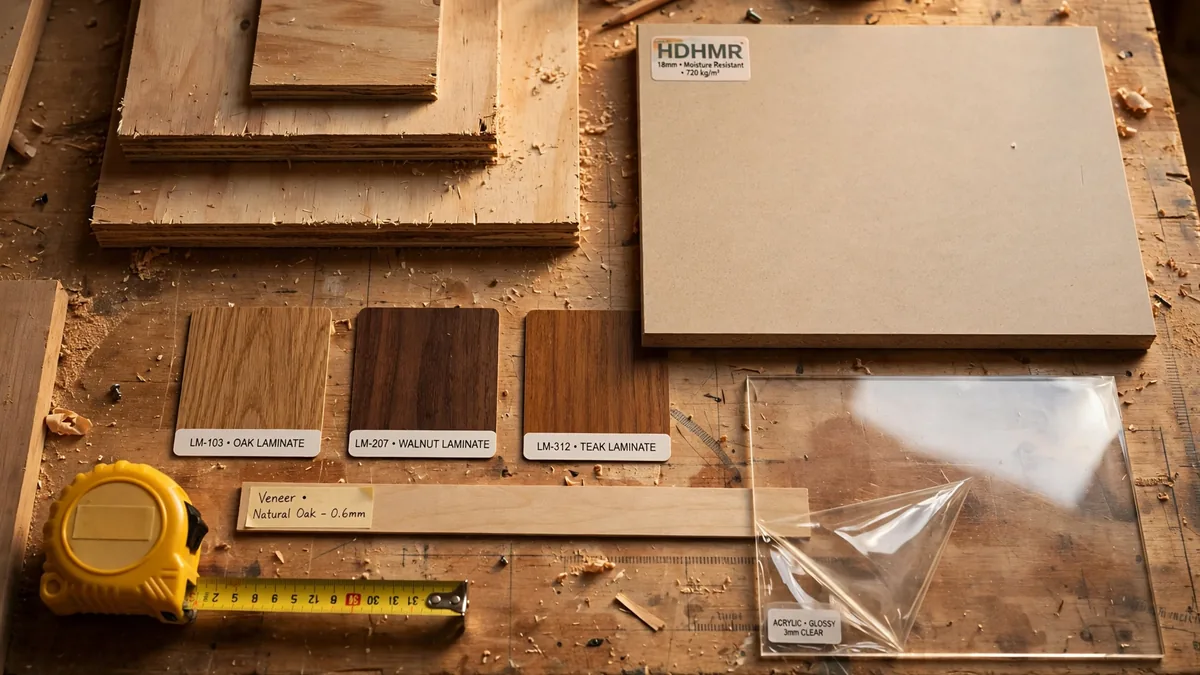
Material samples: ask to see the actual board and laminate for your wardrobe. Image: original AI-generated illustration for RTPL.
4. Hardware: where the money hides
Hardware is the smallest line in most quotations and the part you touch every day. Two wardrobes can share the same plywood and laminate and feel completely different — one has soft-close hinges that shut with a fingertip, the other has hinges that slam and loosen.
The names that matter in India are Hettich and Blum for soft-close hinges and Ebco and Hettich for sliding systems. A soft-close hinge costs more than a basic hinge, but it takes the daily load of a heavy shutter. On a tall shutter, insist on three hinges per shutter, rated for the shutter's weight, not the cheapest in the catalogue.
For sliding wardrobes the track is the wardrobe. A light track under a heavy glass shutter will wear, wobble and jump its groove — which is why the track kit alone can cost ₹6,000–₹28,000. When a sliding quote looks surprisingly cheap, check the track brand and model first; if the quote names none, assume the cheapest and price the upgrade before you sign. The same rule holds for drawer channels and rods: a telescopic channel that runs fully out beats one that sticks halfway, and a rod supported at both ends will not bend under heavy clothes.

Hardware close-up: hinges and tracks take the daily load. Image: original AI-generated illustration for RTPL.
Before the shutters go on, check the carcass: shelves level, back panel sealed, screw points tight, no raw board edge where moisture can enter.
5. What it costs: worked examples
Rates only make sense against a real size. The table below applies the illustrative 2026 ranges to two common wardrobe sizes — worked examples from published guides, not quotations.
| Wardrobe | Front area | Standard (hinged) | Premium (sliding) |
|---|---|---|---|
| 6 ft × 7 ft, single bedroom | 42 sq ft | About ₹50,000 – ₹65,000 | About ₹75,000 – ₹1,00,000 |
| 8 ft × 9 ft, master bedroom | 72 sq ft | About ₹86,000 – ₹1,15,000 | About ₹1,30,000 – ₹1,75,000 |
By specification, the broad 2026 ranges seen were: basic ₹850–₹1,100 per sq ft, standard ₹1,200–₹1,600, premium ₹1,800–₹2,400, luxury ₹2,600–₹3,500 or more. A floor-to-ceiling wardrobe costs more than the same one at 7 ft because the area is bigger — 72 sq ft at 9 ft tall against 56 sq ft at 7 ft, so the same rate gives a bill about 29% higher. What moves a quote from standard to premium is rarely one thing: BWP plywood, acrylic or veneer shutters, branded hardware, extra drawers, a mirror, lighting — each a fair upgrade; the trap is paying premium money for a standard specification the quote never itemised.
6. What your quote must include — and what is usually extra
The most expensive wardrobe mistake is signing a quote that does not include everything, then paying for the rest as extras. Before you sign, confirm in writing whether the quote covers shutters, shelves, drawers, hardware, handles, edge finishing, delivery, installation and taxes. If any is missing, ask for its price now, not on installation day.
Taxes deserve a line of their own. Interior works attract 18% GST since the rate changes of 22 September 2025, and many headline quotes exclude it — ₹14,400 of tax on an ₹80,000 wardrobe. Confirm GST inclusion in writing.
Loft storage, a mirror, LED lighting, a shoe rack and a safe drawer are the usual extras — price them before work starts. The same applies to the wall behind the wardrobe: if it is damp or uneven, the carpenter may need a moisture barrier or packing work, and that should be in the quote too. Finally, ask for an itemised BOQ against actual site measurements, not a headline rate. Our guide on reading a contractor's BOQ like an engineer explains what to look for.

Measure before you order. Image: original AI-generated illustration for RTPL.
7. Inside the wardrobe: plan the layout before the price
A wardrobe's cost is decided by its front area, but its usefulness is decided by what is inside. Before you finalise the price, sketch the interior: hanging space, shelves, drawers, and where the long clothes, folded clothes and shoes go. A wardrobe with two shelves and one rod will cost you a chest of drawers later.
Heavy winter clothes and blankets need deep, strong shelves. Daily wear needs hanging space you can reach without a stool. A full-length mirror on a shutter saves a separate dressing mirror, and a floor-to-ceiling design gives you a loft for the things you use twice a year.
Check the depth before you approve the design. A standard wardrobe is about 24 inches deep; a sliding wardrobe loses 3–4 inches of that to the track. Hang a coat hanger in the planned depth and see whether it clears the shutter, and check each drawer pulls fully out clear of the bed and wall.

Plan the interior before the price is fixed. Image: original AI-generated illustration for RTPL.
8. Before you pay: a five-minute checklist
Run these checks at handover, while the carpenter is still on site.
- Measure it. Check width and height against the quote — 6 inches short is a smaller wardrobe at the same price.
- Open and shut everything. Every shutter, drawer and hinge — shutters should stay where you leave them, drawers should run out fully and return smoothly.
- Look at the edges. Edge banding should be sealed all round — raw edges absorb moisture and peel first.
- Check the back. The back panel should be sealed against the wall, with no gap for dust and damp.
- Confirm the hardware. Hinges, tracks and channels should match the brands and models named in the quote.
- Ask about the warranty. Get in writing what is covered and for how long.
A modular wardrobe is one of the few things in a home you touch every single day. Paying for the right carcass, the right hardware and a complete quote is not overspending — it is buying the mornings when everything opens, slides and shuts exactly as it should. Planning the rest of the room? Our guides on modular kitchen costs in India, false ceiling costs and the new house handover checklist cover the other big-ticket interiors decisions the same way. And if you want RTPL to plan the wardrobe with your home's interiors, talk to us.
Last reviewed: 12 November 2026. All prices are illustrative ranges from web-search results seen on 12 November 2026; verify against a written, itemised quotation for your city before deciding.