The ceiling stain shows up one monsoon after the terrace was "fixed" — and the fix usually failed in the same place the last one did. A leaking terrace rarely fails in the middle of the slab. It fails where the slab meets the parapet wall, around a drain outlet, or where water sits for days because the slope is wrong. This guide compares the main methods used in India, their 2026 costs, the detailing that decides whether the work lasts, and the one test to insist on before you pay.
1. Why Indian terraces leak — it is almost never the middle of the slab
Most Indian homes have flat RCC terraces, and a flat terrace collects water. Every place water collects or changes direction is a possible failure point: hairline cracks from thermal movement, the joint where the parapet meets the floor, a blocked or badly set drain outlet, and old waterproofing cracked by heat and age. Most leaks trace to the slab-parapet junction and around drain outlets, not the open field — which is why patch jobs in the middle keep failing.
Standing water is the multiplier. A terrace that drains within twenty minutes of rain will tolerate a small defect; one that holds water for two days will leak through a good membrane, because standing water finds every pinhole given time and pressure. Before choosing any product, walk the terrace after rain and map ponding, cracks, and whether outlets sit lower than the screed. If an outlet mouth sits above the screed, water can never fully drain — lowering it costs a few thousand rupees and solves many supposed membrane failures.
2. The five main terrace waterproofing methods compared
There is no single best method — there is the system that matches your roof's cracks, drainage, use and existing layers. The table blends 2026 ranges from several published Indian guides; they disagree on band edges, so treat every figure as illustrative, not a quotation.
| Method | Rate per sq ft (Rs) | Typical life | Best for |
|---|---|---|---|
| Acrylic / elastomeric coating | 45 – 120 | 4 – 8 years | Sound terraces; tight budgets |
| Polymer-modified cementitious coating | 40 – 90 | 5 – 10 years | Shaded slabs; mild seepage |
| PU liquid membrane | 70 – 220 | 8 – 12 years | Cracked slabs; many penetrations |
| APP torch-applied membrane | 80 – 260 | 10 – 15 years | Large open terraces |
| Brickbat coba with membrane | 60 – 120 | 10 – 15 years | Old slabs needing slope correction |
| EPDM rubber sheet | 220 – 380 | 15 – 20 years | Premium villas |
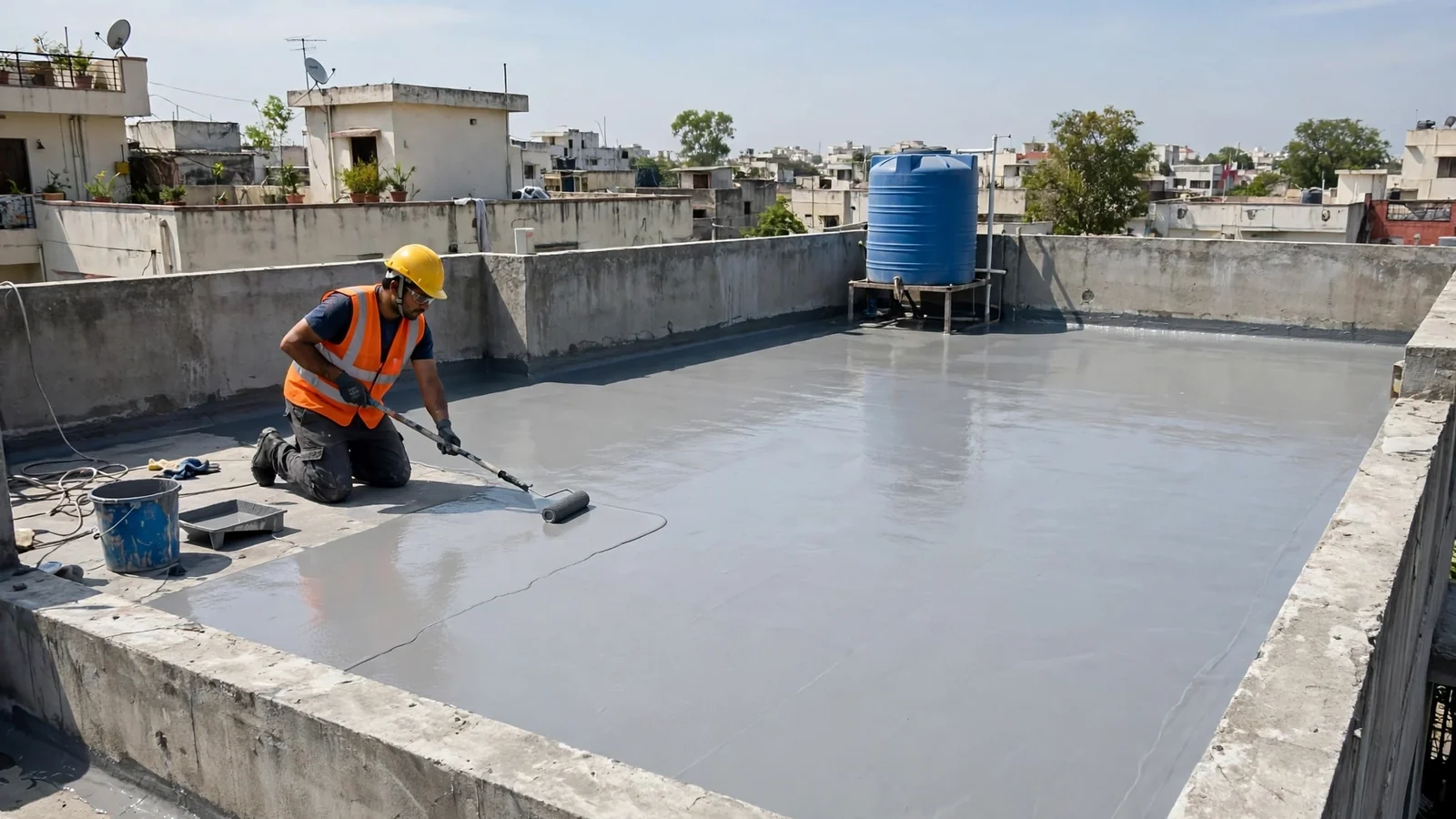
Acrylic and elastomeric coatings are the cheapest entry point — products in the Dr. Fixit Roofseal class, roller-applied in two or three coats. They stay visible, so future maintenance is straightforward, but they are thin films: on a cracked slab they bridge nothing. A cementitious coating on an already-cracked terrace is the classic Indian mistake — the crack moves, the coating splits, the leak returns.
PU liquid membrane is the best all-rounder for most homes: a seamless, flexible film that follows complex shapes and seals around pipes and penetrations without joints. It needs a dry, prepared surface and a trained applicator, plus a protective screed or tiles above it where the terrace is walked on.
APP torch-applied membrane — modified bitumen sheets heat-bonded to the slab — is the default right answer for large open residential terraces: controlled thickness, 10 to 15 years of life, and a cost per year of service roughly the same as a cheaper coating. The catch is workmanship: every lap, upturn and outlet depends on skilled installation and safe torch practice. IS 3067, the code of practice for laying damp-proof treatments using bitumen felts, guides sheet-membrane selection.
Brickbat coba — broken brick pieces set in mortar over a membrane, finished with a screed — is the traditional Indian method. It adds slope and thermal mass, but it adds weight to the slab and is workmanship-led: a badly laid coba cracks, hollows and holds water rather than shedding it. Check with a structural engineer before adding a heavy coba layer to an old slab.
Judge every method by cost per year of service, not by the quote: a coating at Rs 70 per sq ft lasting 6 years costs about Rs 12 per sq ft per year, and an APP membrane at Rs 180 lasting 12 years costs about Rs 15. The difference is how many times you pay for scaffolding, disruption and a re-do.
3. What a full terrace job costs in 2026 — worked example
On an honest quote, roughly a third of the money is surface preparation — chipping loose screed, cutting and filling cracks, coving the parapet junction and washing down — before a single coat goes on. A quote far below the rest usually skips that third. Waterproofing is a works contract, so 18% GST applies to the whole labour-plus-material value. Small terraces under 500 sq ft carry a higher rate, because mobilisation and minimum pack sizes are fixed costs.
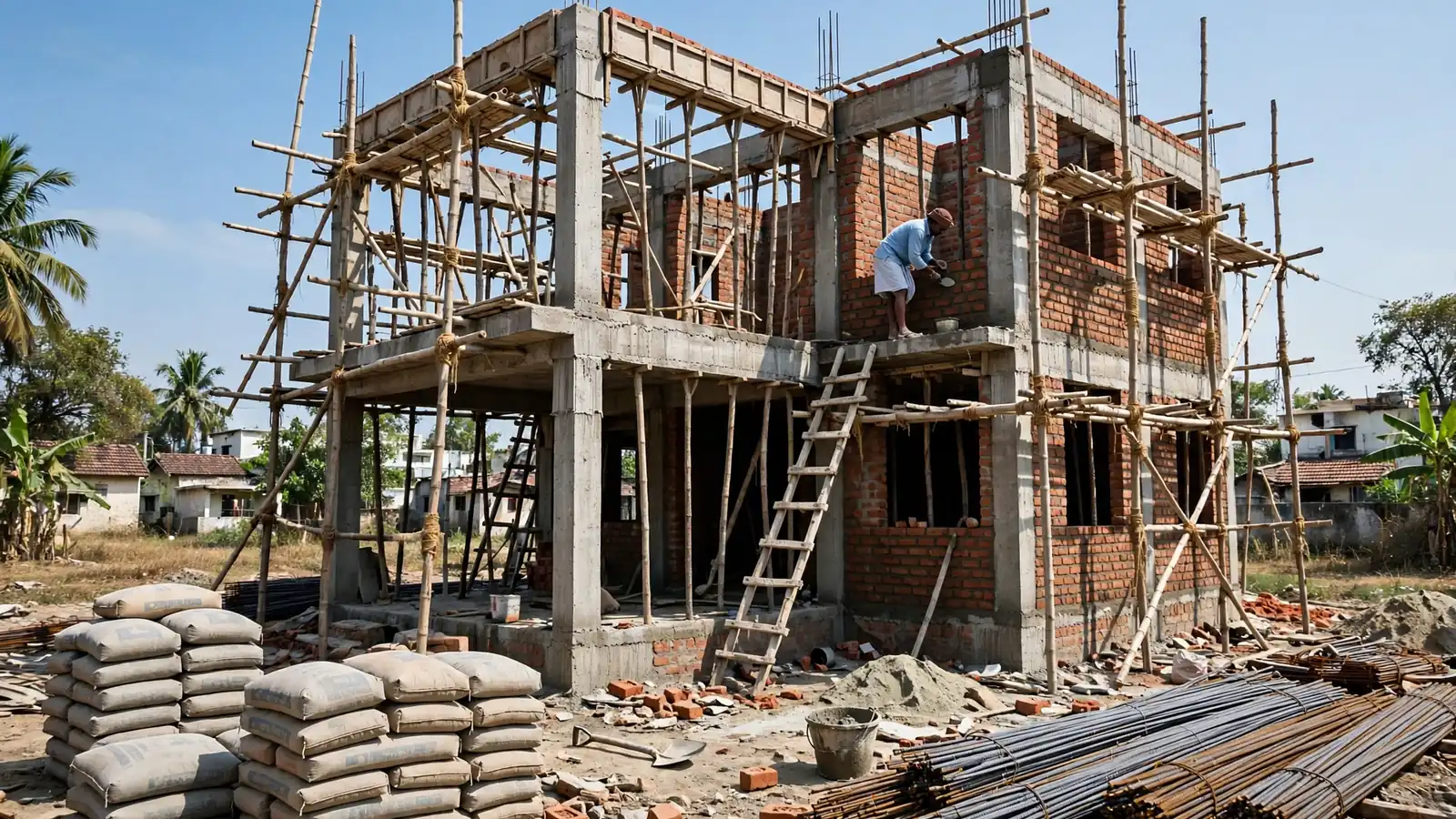
For a 1,000 sq ft terrace, the published 2026 guides put the total at roughly Rs 55,000 to 75,000 with a cementitious system and roughly Rs 95,000 to 1,40,000 with PU. If the old screed must be removed and the slope rebuilt, the total can reach Rs 1,50,000 to 3,50,000 or more. A leaking terrace costs roughly 1.4 to 1.8 times more to fix than a sound one, because the old layers come off first. For the wider budget picture, see our guide on house construction cost in India 2026.
4. The detailing that decides whether it lasts
Waterproofing fails not because the material is bad but because the system — substrate, slope, membrane, junction detailing and protection — has a weak link, invisible once the surface is finished. Four details matter more than the brand on the bucket.
Slope to the drains. Water must run off, not pond. A minimum fall of about 1:100 to 1:150 toward the outlets — roughly 1 cm per metre — is the published guide practice, achieved with a PCC or rich-mortar screed. After laying the slope, pour a bucket of water and look for low points. A flat terrace that holds water defeats any membrane.
Coving at every junction. Where the floor meets a wall — parapet bases, drain throats, wall-slab junctions — the membrane must negotiate a 90-degree internal corner. Applied into a sharp corner it cannot bond fully; it bridges the angle and leaves an unbonded pocket. The correct detail is a fillet: a chamfered mortar haunch, typically 75 mm × 75 mm, that rounds the corner. Skipping it is responsible for a large share of parapet-junction leaks.
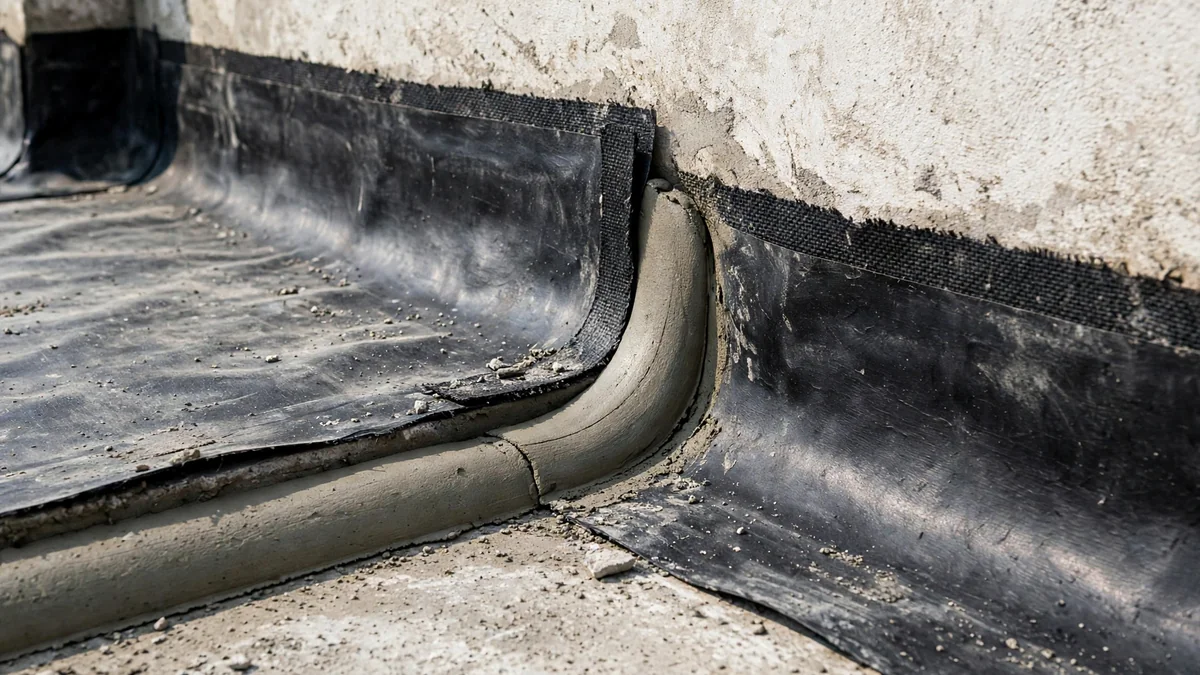
Upstand height. The membrane must turn up the parapet by at least 150 to 300 mm. Where it stops short, driving rain and ponded water get behind it, and the leak appears at the topmost internal wall corner.
Outlets at the lowest point. Rainwater outlets (khurras) must sit at the lowest point of the finished surface, with the membrane dressed into them and fibre-mesh reinforcement around the perimeter. Blocked outlets are the most common maintenance failure: a terrace that drains in twenty minutes in May can pond for two days in July.
Brickbat coba and any added screed add dead load to the slab — get a structural engineer to confirm the slab can carry it, especially on older buildings. Costs here are illustrative market ranges, not a quotation for your roof.
5. Seven mistakes that cause leaks
- Choosing the wrong product for the condition. A rigid coating over a cracked slab, or a thin coat where a membrane is needed. Match the system to the cracks, not to the budget.
- Skipping surface preparation. Applying a membrane over loose screed, dust or a damp surface. Roughly a third of a good job's cost is preparation — a quote that skips it is incomplete.
- No slope, or the wrong slope. A dead-flat terrace ponds water for days. Every membrane has a limit, and standing water finds it.
- Ignoring the coving. Sharp corners at parapet bases and columns, where the membrane cannot bond. A 75 mm fillet costs little and prevents the most common leak.
- Low upstands and unsealed penetrations. Membrane stopping short of 150 mm up the parapet; pipe and tank penetrations left unsealed.
- Patching over a failed system. A new coat over a ponding terrace or active cracks, without first filling the cracks and correcting the slope. The new membrane inherits the stresses that destroyed the old one.
- Skipping the ponding test. The only proof the job works. No test, no handover.
6. The ponding test — the only proof before you pay
After the membrane has cured, block every rainwater outlet with a clay bund, fill the terrace with water to 25 to 50 mm depth, mark the level on the parapet, and leave it for at least 48 hours — some guides say 48 to 72. Check the ceiling below at 6, 24 and 48 hours. A leak in the first six hours means an open crack or a failed junction; a leak only near the end means slow passage through a thin membrane. If anything leaks, drain, repair the exact source, and repeat the test until it is dry. Do not accept a hose test — a hose cannot reproduce two days of standing water.
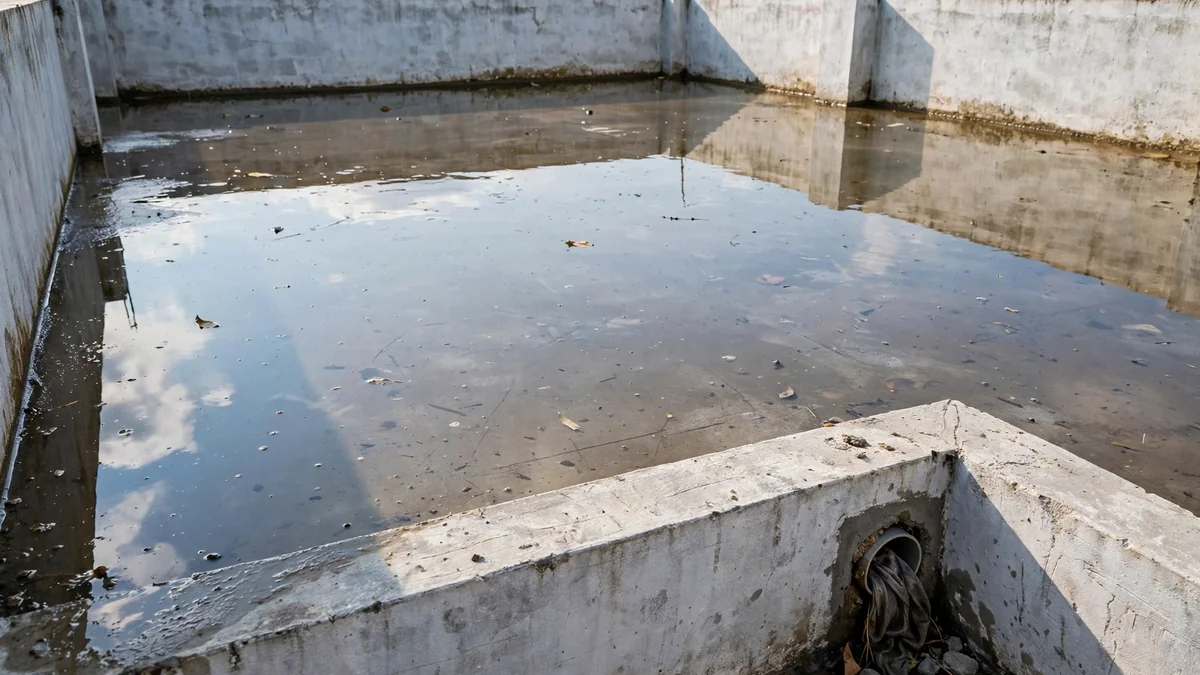
If the terrace stays dry through the pond test but still leaks in the monsoon, the deck is probably not the problem — look at the parapet face, the coping and the ducts instead, with a directional hose test on the vertical surfaces. Check the room underneath before the test starts, so a pre-existing damp patch is not blamed on the new work.
7. When to do it, and what to ask before you sign
The best time to waterproof a terrace is the dry season before the monsoon — you want the surface bone-dry for application and curing, then let the first rains test it. Inspect in September, while the monsoon evidence is still fresh: walk the terrace, map the ponding areas, cracks, hollow sections and outlets, and photograph them before any quote.
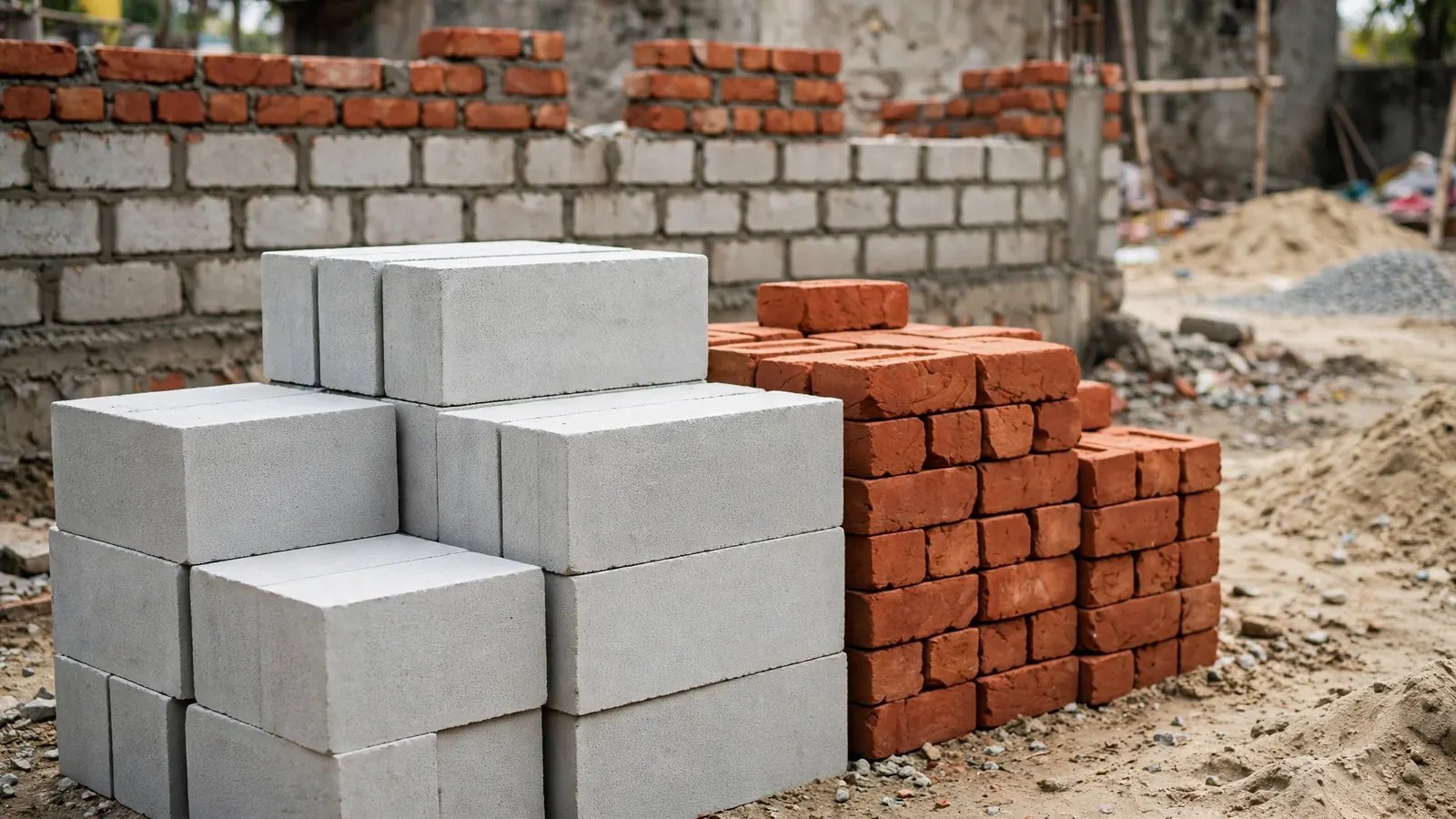
Before you sign, ask five questions in writing: which system and which manufacturer's products, with the data sheet; what surface preparation is included; what slope and coving details will be built; whether a 48-hour ponding test is included before final payment; and what the guarantee covers — it is only worth something if it comes from the chemical manufacturer and the work is done by their approved applicator. For parapet wall choices, see our comparison of AAC blocks vs red bricks in India.
8. Homeowner checklist before the first coat
- Walk the terrace after rain; map ponding, cracks and outlet levels.
- Fix the tank overflow and leaking valves before work starts.
- Get two or three quotes for the SAME system and scope — never compare a coating quote with a membrane quote.
- Confirm preparation, slope, coving and upstand details in writing.
- Check the membrane turns up the parapet at least 150 mm, with a 75 mm × 75 mm fillet at the base.
- Insist on a 48-hour ponding test at 25–50 mm depth, ceiling below checked at 6, 24 and 48 hours.
- Hold final payment until the test passes — repeat after any repair.
- Keep the data sheets, guarantee and ponding-test photos on file.
If you are planning terrace waterproofing in Uttar Pradesh or Delhi NCR and want the method, scope and test agreed before work starts, RTPL Constructions & Engineering can help you work through the specification before you commit to a contractor. A terrace done once, properly, is the cheapest roof you will ever own.