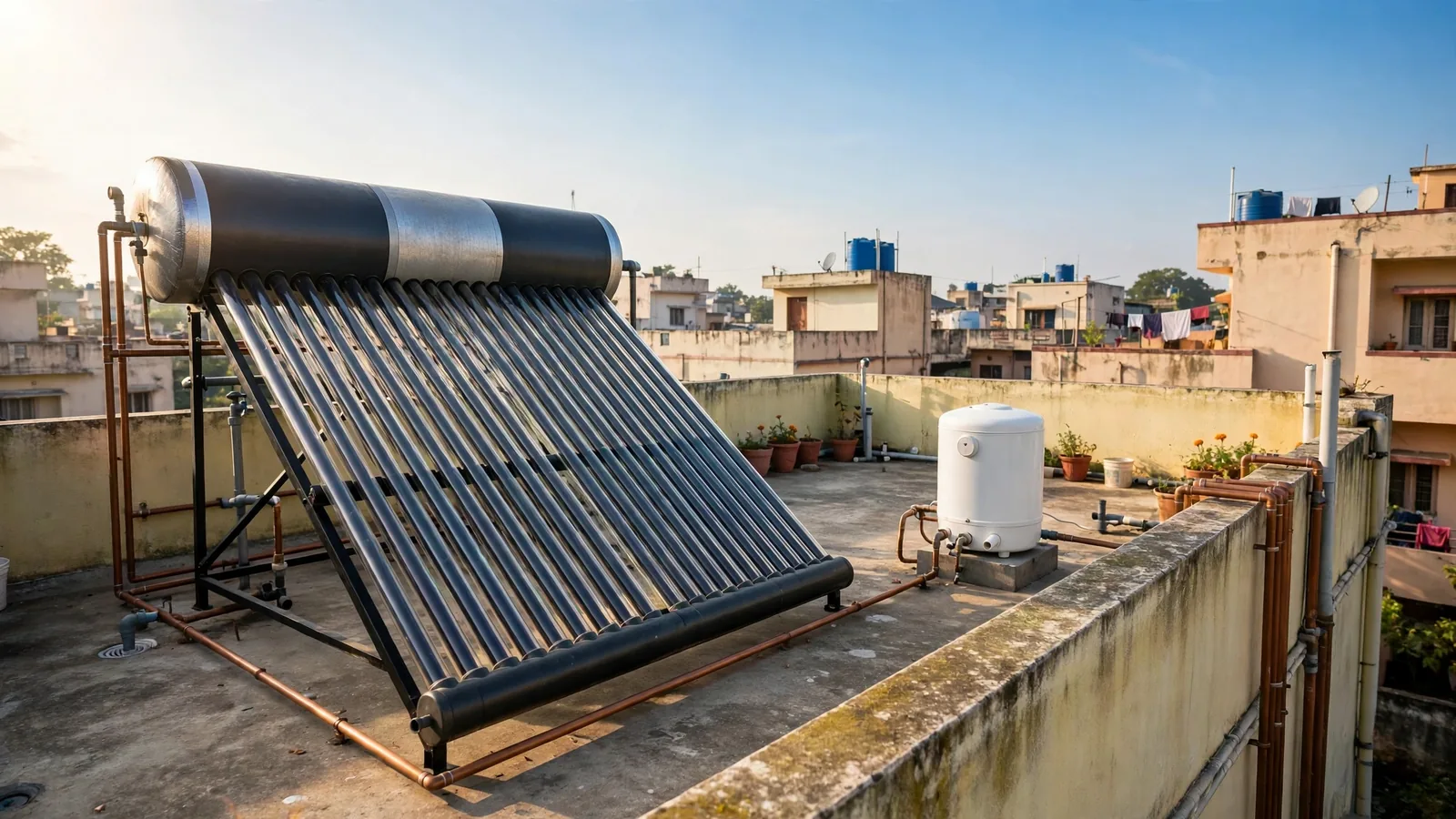
A geyser heats water in 15 minutes and costs little to buy. A solar water heater costs three to four times more upfront, then heats water almost free for 15 years or more. Both are right answers — for different homes. The mistake is buying one for the other's job: solar on a shaded roof, or a geyser where four people bathe with hot water every morning. This guide works out the real numbers.
1. The short answer
If your family uses hot water every day and you have a sunny, unshaded roof, solar wins on lifetime cost: the higher price is usually recovered in 2–4 years of saved electricity, and after that hot water is effectively free for the remaining 10–15 years of the system's life. If hot water use is occasional, the house is rented, or there is no usable roof space, the electric geyser is the honest choice — cheap to buy, quick to heat, simple to replace. The wrong choice is the one that does not match how your household actually lives.
2. How each one heats water
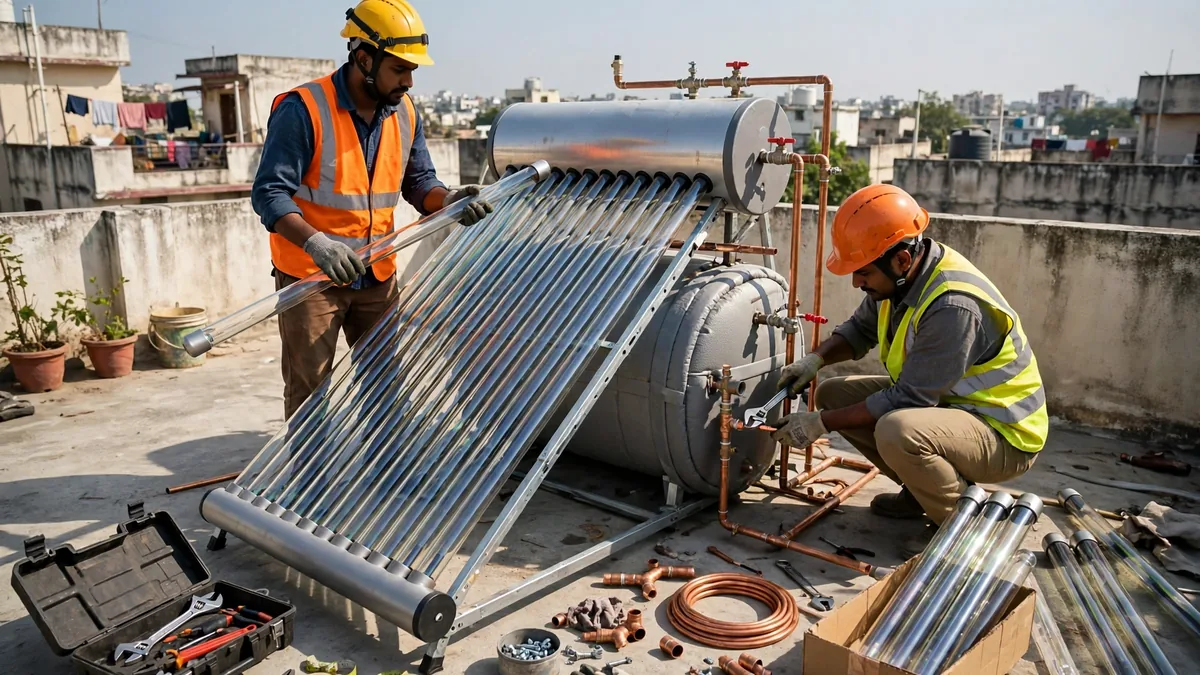
A solar water heater collects heat from the sun and stores it. Collectors on the roof — evacuated tube collectors (ETC) or flat plate collectors (FPC) — absorb sunlight and transfer the heat to water, which rises into an insulated storage tank. The tank keeps water hot into the evening, and most systems include an electric backup element for cloudy stretches. It heats in 2–4 hours.
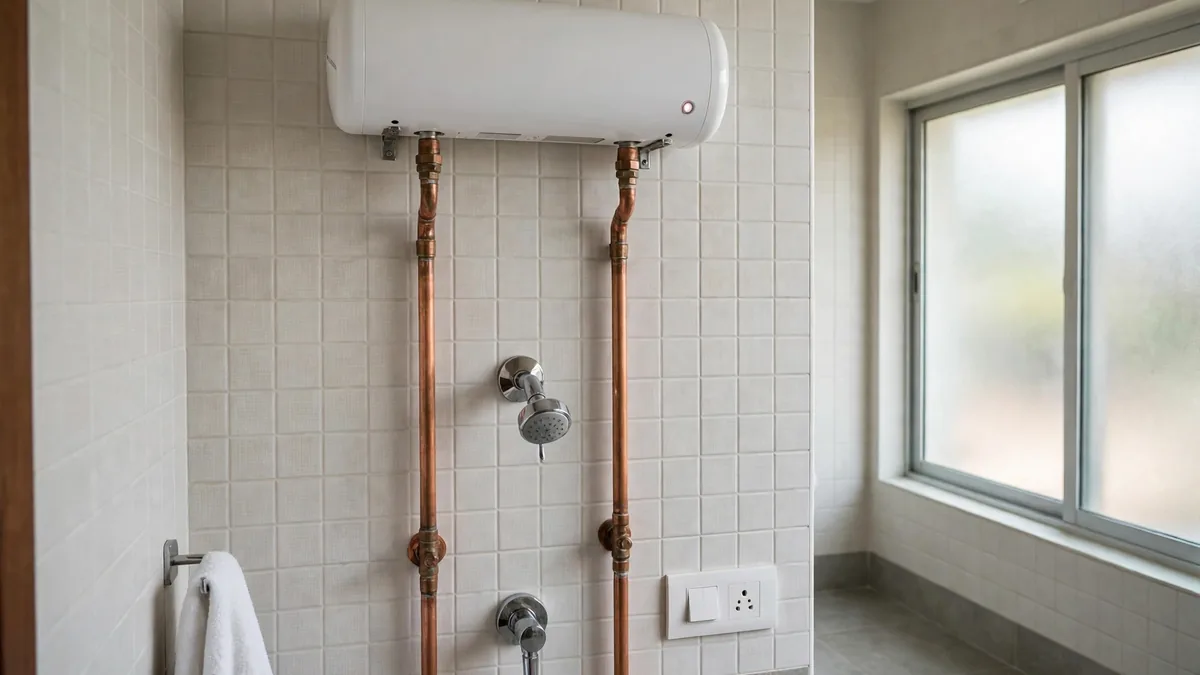
An electric storage geyser is simpler: a heating element inside an insulated tank, switched on when you need hot water, ready in 15–20 minutes. A typical unit draws 1.5–3 kW while heating. Its advantage is control — hot water on demand, in any weather, with no roof involved. Its disadvantage is that every litre is paid for in electricity, month after month.
ETC or FPC — which collector suits an Indian home?
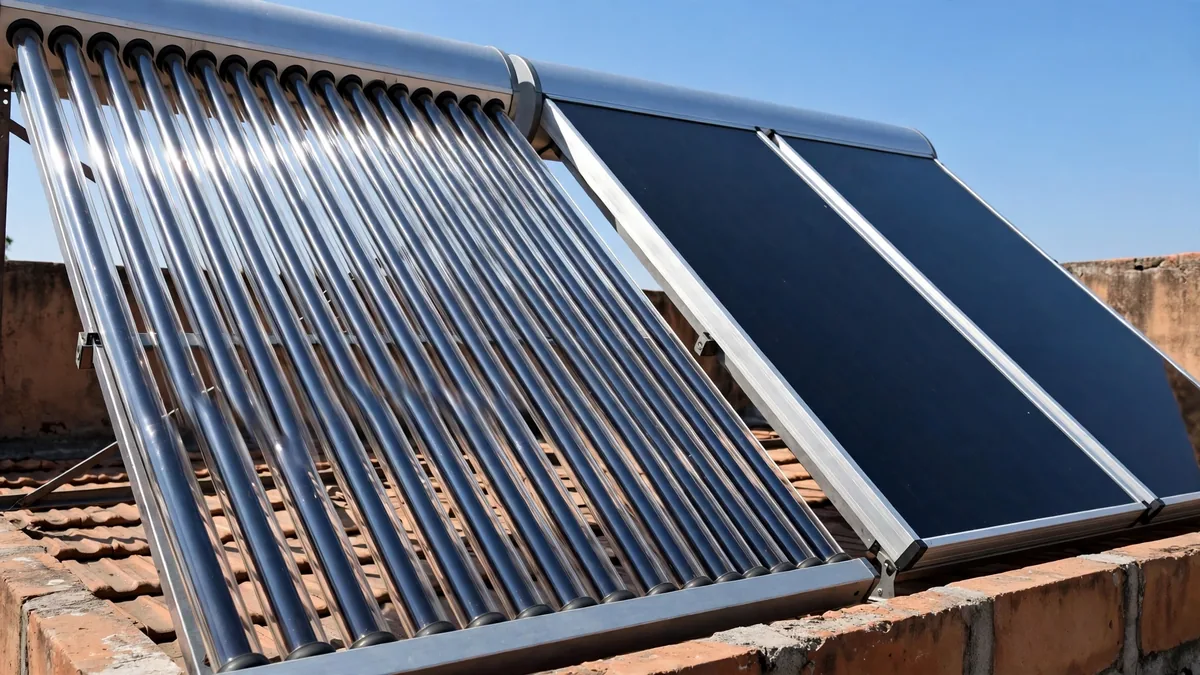
ETC uses rows of glass vacuum tubes. It is generally cheaper and performs slightly better in colder or cloudier conditions. Its weakness is fragility — a tube can crack from a hard knock or hail, though individual tubes can be replaced. FPC is a flat, insulated panel with a dark absorber plate under glass: tougher, marginally better in consistently hot, sunny climates, but usually costlier. For most of India's climate, guides agree either type delivers strong results — brand, tank insulation and installation matter more. Buy the one your local dealer can service.
3. What it costs to buy and install
There is no single price for either system. City guides checked in November 2026 put an electric storage geyser at roughly Rs 6,000–15,000 for a standard 15–25 litre unit, with premium brands reaching Rs 8,000–25,000. A 100–200 litre home solar system is quoted at roughly Rs 15,000–35,000 in one guide, Rs 20,000–50,000 in another, and Rs 25,000–60,000 including installation in a third. All figures are illustrative; get a written quote for your house.
The gap looks large until you count what is inside it. A solar price includes the collector, insulated tank, stand, roof-to-bathroom piping and installation labour. A geyser price usually covers only the unit — installation, a 16-amp point, a safety switch and plumbing are extra, and so is a decade of electricity. Compare complete installed cost, not sticker price.
| Item | Electric geyser | Solar water heater |
|---|---|---|
| Typical purchase | Rs 6,000–25,000 (15–25 litre storage) | Rs 15,000–60,000 (100–200 litre system) |
| Installation extras | 16-amp point, safety switch, plumbing | Stand, roof piping, insulation, backup wiring |
| Running cost | Rs 500–1,500/month extra on the bill | Near zero; backup on cloudy days |
| Typical life | 8–12 years | 15–25+ years with maintenance |
One question comes up in almost every conversation: subsidy. Be careful here. PM Surya Ghar, the well-known rooftop solar scheme, is for rooftop solar power systems — panels that generate electricity — not for solar water heaters. Do not let a dealer sell you a water heater on the promise of a PM Surya Ghar subsidy. Some states have had their own water-heater schemes, and some guides quote 30–70% support, but those figures are unverified and change often. Check with your state nodal agency before counting any subsidy in your budget.
4. The running cost — where the geyser actually costs you
The purchase price is the small part of the geyser's cost. A family of four using about 150 litres of hot water a day from a 2 kW geyser, running it 2–3 hours daily, uses roughly 60–120 units a month just for water heating — roughly Rs 500–1,500 extra a month on the bill. Over ten years that is Rs 60,000–1,80,000 of electricity — several times the price of the geyser itself.
Work it out for your own house: geyser wattage × hours run each day × 30 ÷ 1,000 gives the units per month for water heating alone. A 2 kW geyser running 2 hours a day uses about 120 units a month. Multiply by your tariff slab and you have the monthly cost solar would mostly erase. Solar's running cost is near zero — sunlight is free — apart from the backup element on cloudy days. Guides quote a 70–90% reduction in water-heating electricity cost with solar.
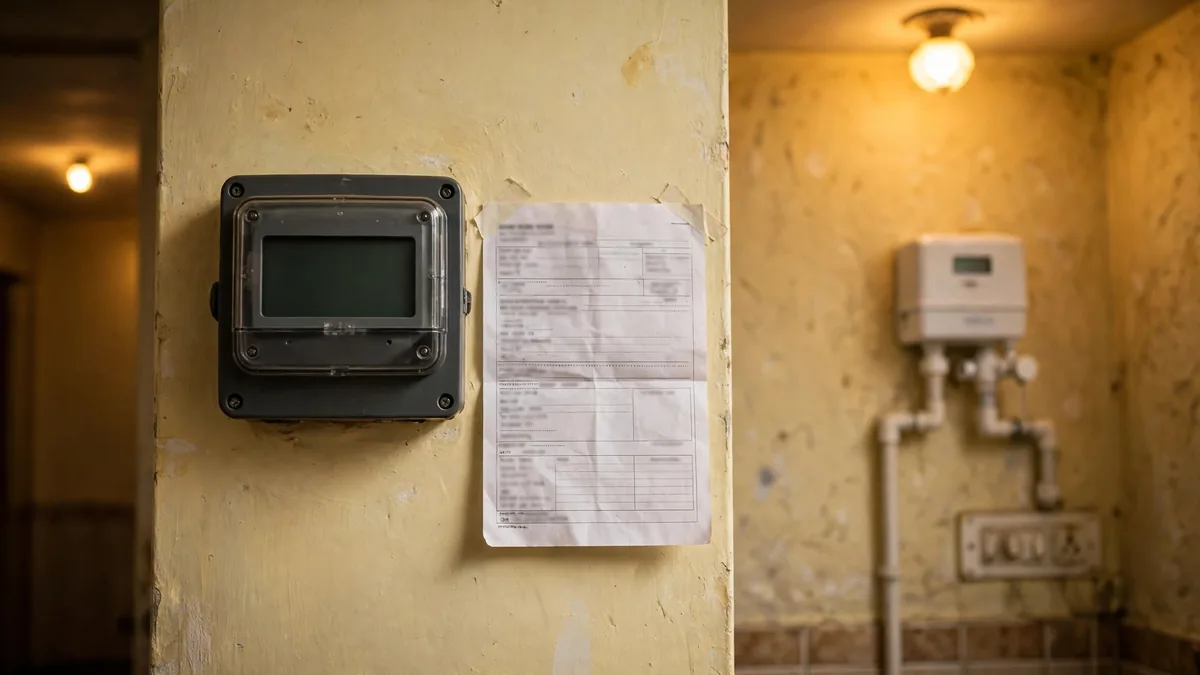
The geyser's running cost can be cut without replacing it: heat only the water you will use, switch it off instead of leaving it on all day, and set the thermostat low. But these save a few hundred rupees a month at best. Solar removes the cost rather than trimming it.
5. Payback — when solar starts paying you back
Payback is the time the electricity savings take to cover the extra amount solar cost over a geyser. Most guides quote 2–4 years; some regional guides quote 5–7 years for a 150-litre system. A household that uses a lot of hot water and pays a higher tariff recovers the cost fastest. A household that uses hot water sparingly recovers it slowly.
Take an illustrative example: solar costs Rs 20,000 more than a geyser installation and saves Rs 800 a month on the bill. The extra cost is recovered in about 25 months — just over two years. After that, the same Rs 800 a month stays in your pocket. If the saving is only Rs 400 a month, payback stretches to about four years. Run the same two numbers for your house: extra upfront cost ÷ monthly saving. Under four years, solar is the better buy on money alone. Over seven years, think twice.
| Household | Monthly saving | Extra upfront cost | Payback |
|---|---|---|---|
| Family of 4, daily hot baths | ~Rs 800–1,200 | ~Rs 20,000 | ~1.5–2 years |
| Couple, moderate use | ~Rs 400–600 | ~Rs 20,000 | ~3–4 years |
| Single person, occasional use | ~Rs 150–250 | ~Rs 20,000 | ~7–11 years |
6. Roof, space and installation checks
Solar needs what a geyser does not: a roof. A 100–200 litre system needs about 40–60 sq ft of unshaded rooftop facing south. The roof must be sound enough for the full tank (a 200-litre tank weighs over 200 kg plus stand and collectors), and the stand must be anchored. In a flat or a rented house, or where the roof is crowded, there may be no workable spot — and that alone settles the choice in favour of the geyser.
Shade is the silent killer of solar performance. A collector shaded for even part of the day — by a neighbour's taller building, a tree, or your own overhead tank — loses far more output than the shaded fraction suggests. Visit the roof at 9 am, noon and 3 pm before ordering, and check the shadow line in winter, when shadows are longer. A dealer who measures the roof is doing their job.
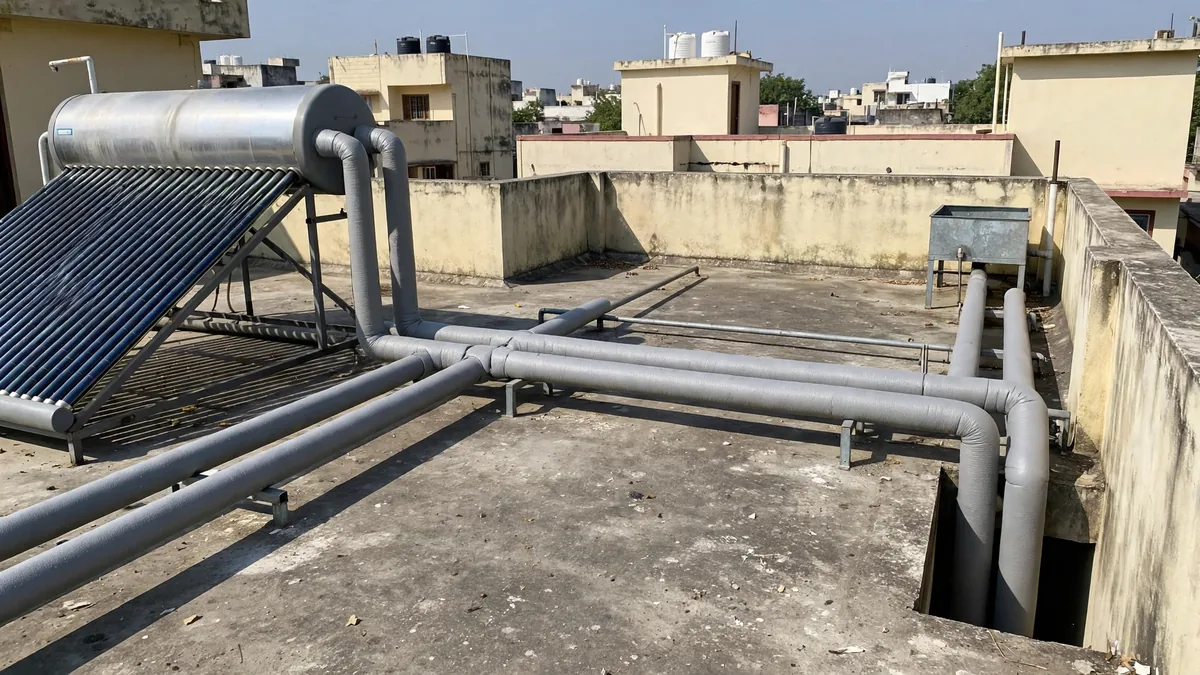
Hot water also has to travel from the roof to the bathroom. Long, uninsulated pipes lose heat on the way down, so the first water out of the tap is lukewarm. Insulate the hot-water pipes, keep the run short, and put the tank above the bathrooms so gravity works with the system. Our guide on plumbing layout before slab casting covers the pipe planning that decides whether a system performs or disappoints.
7. Cloudy days, winter and backup
The honest question about solar is not whether it works in summer — it does, easily — but what happens in December and during a week of monsoon cloud. Winter efficiency can drop 20–30% compared with summer, and on a fully overcast day the collectors produce far less. The water will still be warm, but may not be hot enough for a bath without help.
That is what the backup element is for. Most solar systems include an electric heating element in the tank, switched on manually or by a timer, which tops the water up to bathing temperature on cloudy days. With the backup, a solar household is never without hot water — it simply uses some electricity in the worst weeks of the year. A geyser, by contrast, is weather-proof — the same 15–20 minutes, in January or in July.
One habit makes winter work better: draw hot water in the late afternoon and evening, when the tank is at its hottest, rather than leaving it to cool overnight and bathing at dawn. In a new build, also think about the roof itself — our guide on cool roof options explains how roof treatment and shading interact with what sits on the terrace.
8. Maintenance and lifespan
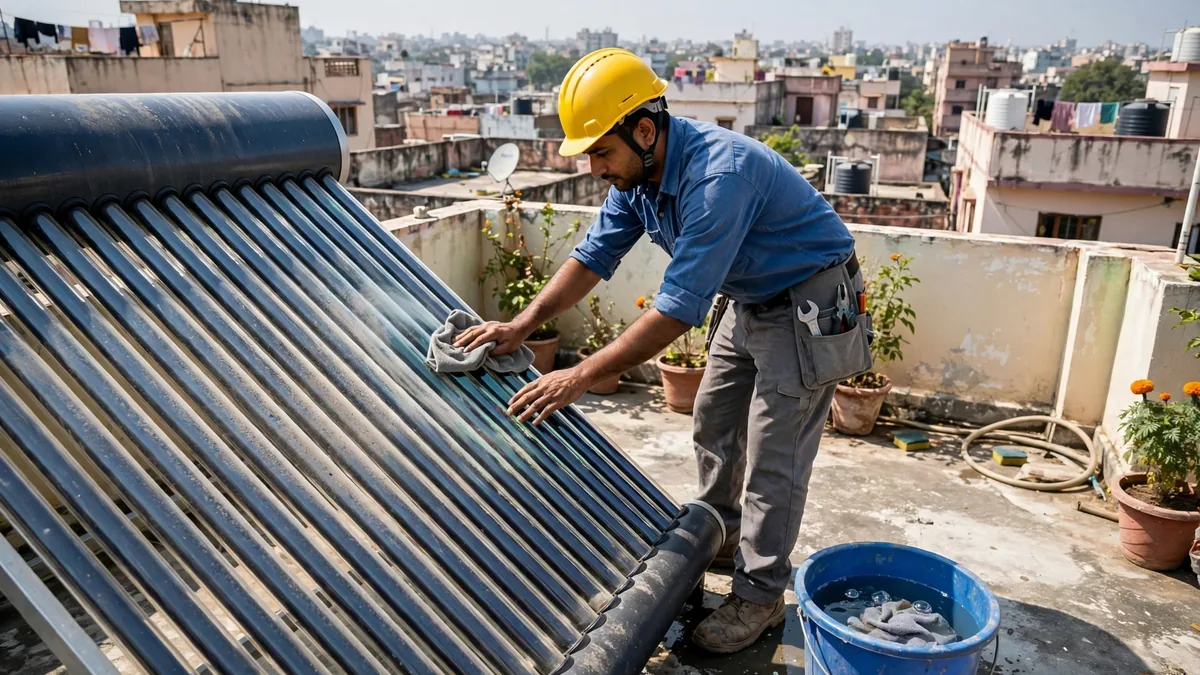
A geyser's maintenance is small but real: the tank needs descaling in hard-water areas, the anode rod and thermostat wear out, and a typical unit lasts 8–12 years. When it fails, it is swapped in a day. A solar system lasts longer — 15–25 years or more — but its maintenance is on the roof. Dust cuts output, so the tubes or panels need cleaning every few weeks in dusty areas; the tank and pipes need an annual check for leaks and insulation damage.
Buy from a dealer who will still be there in five years. A solar system is a 15-year relationship, not a one-day purchase: spare tubes, gaskets, the backup element and the tank's anode all need a supplier. Ask for the warranty in writing — what it covers, for how long, and who honours it. The same applies to the geyser's electrical safety: a geyser needs a proper 16-amp point, earthing and a safety switch, covered in our guide on house wiring in India.
A full solar tank is heavy, and a roof installation is structural work, not just plumbing. Confirm the roof slab can carry the loaded weight and that the stand is anchored against wind. Final structural and electrical decisions need a project-specific assessment by a qualified engineer or licensed electrician.
9. Which one should you buy?
Choose solar if four things are true: the family uses hot water every day, the roof has 40–60 sq ft of unshaded south-facing space, the house is yours and you will live in it for at least five years, and you can accept a backup element on the cloudiest weeks. Then the arithmetic is on your side.
Choose the electric geyser if hot water use is occasional, the house is rented, the roof is shaded or unavailable, or you need hot water on demand in any weather. It is the cheaper, simpler answer — you just pay for the electricity every month.
Either way, decide from your own numbers: litres a day, hours the geyser runs, your tariff slab, and whether the roof is genuinely free. A system chosen from the house's actual use lasts; one chosen from a sales pitch disappoints. For a measured recommendation, talk to RTPL with your family size, roof situation and current electricity bill.

